


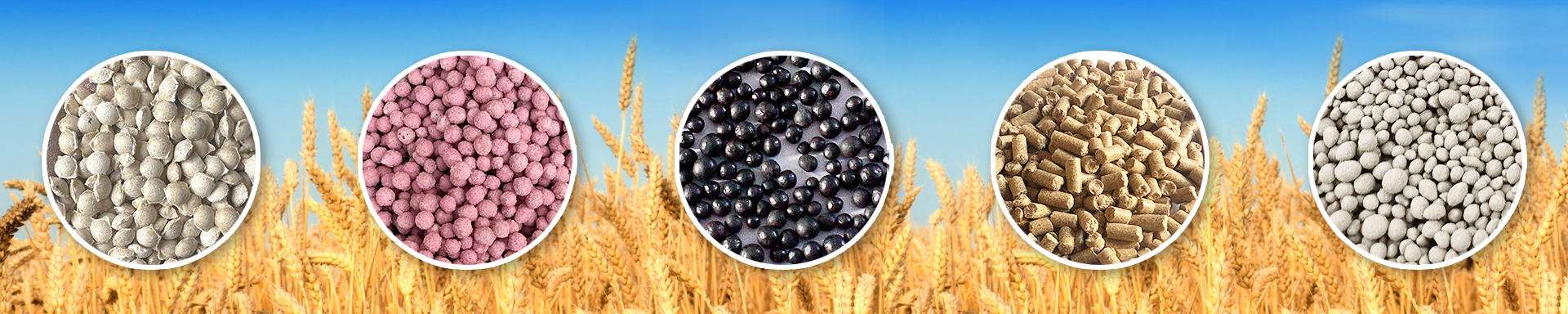
Automated Inorganic Fertilizer Granulation Line - Custom Design Available
Published on: 2026-05-13Inorganic fertilizers, including nitrogen fertilizers, phosphorus fertilizers, potassium fertilizers, and compound fertilizers, are essential for improving crop yields and soil fertility, and their large-scale, standardized production has become a key support for modern agriculture. Automated inorganic fertilizer granulation lines integrate advanced automation technology and professional granulation processes, realizing full-process intelligent operation from raw material pretreatment to finished product packaging. What distinguishes them from conventional production lines is the available custom design, which can be tailored according to users’ production scale, raw material characteristics, product specifications, and site conditions, perfectly matching diverse production needs. This article provides a detailed introduction to automated inorganic fertilizer granulation lines, including their overview, core process flow, custom design highlights, key equipment configuration, advantages, application scope, and operation maintenance, helping users fully understand the value of this equipment in inorganic fertilizer production.
Overview of Automated Inorganic Fertilizer Granulation Line
An automated inorganic fertilizer granulation line is a set of integrated production equipment specially designed for the large-scale production of inorganic fertilizers. Different from organic fertilizer production lines, it is optimized for the characteristics of inorganic raw materials—such as high hardness, good fluidity, and easy chemical reaction—to ensure stable granulation effect and product quality. The line integrates multiple functional links, including raw material crushing, batching, mixing, granulation, drying, cooling, screening, and packaging, all of which are controlled by an intelligent system to minimize manual intervention.
The core highlights of this production line are “automation” and “custom design available”. Automation is reflected in the precise control of each production link, which can accurately adjust parameters such as batching ratio, granulation speed, and drying temperature, ensuring consistent product quality and high production efficiency. Custom design means that the entire line can be flexibly adjusted in terms of equipment configuration, production capacity, and process flow according to users’ actual needs, avoiding the waste of equipment investment and realizing the optimal matching between production line and production demand. It is widely used in inorganic fertilizer production enterprises, chemical fertilizer plants, and large-scale agricultural supporting projects.
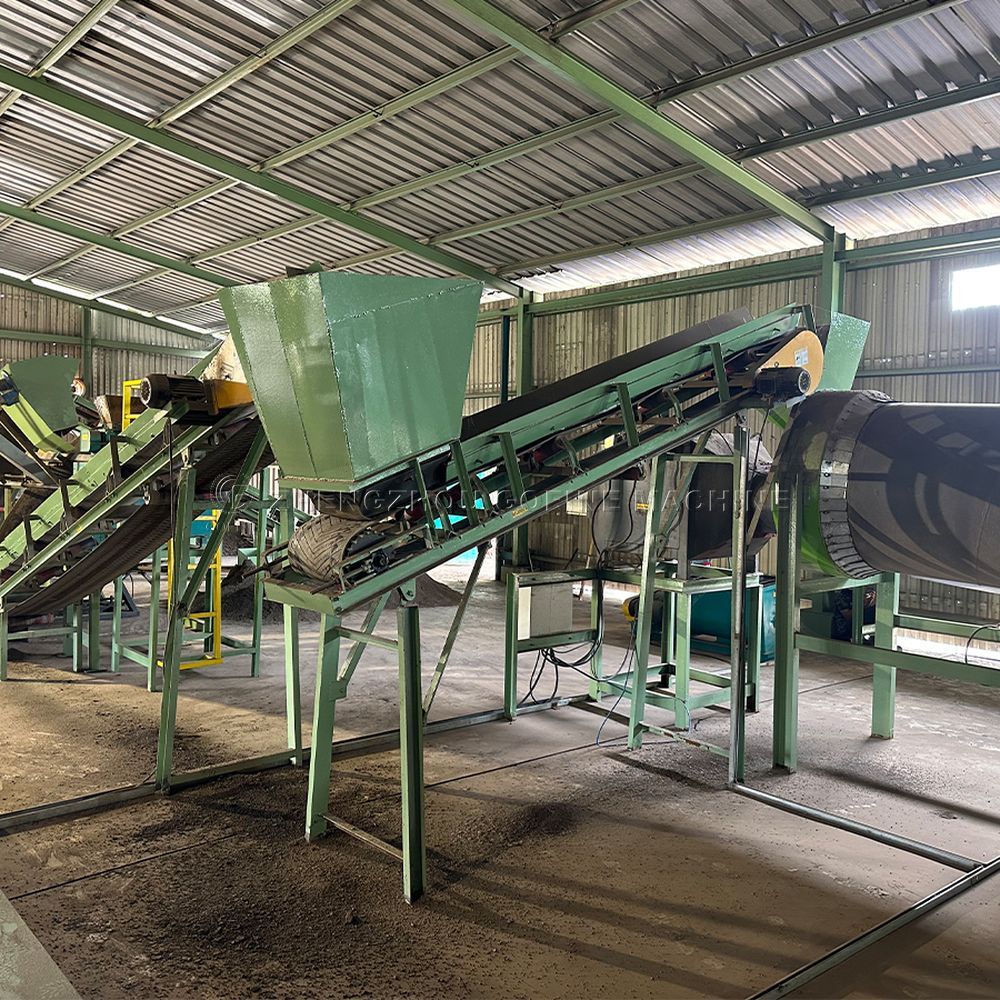
Core Process Flow of Automated Inorganic Fertilizer Granulation Line
The automated inorganic fertilizer granulation line follows a scientific and standardized production process, with each link closely connected and fully automated. The process is optimized for the physical and chemical properties of inorganic raw materials, ensuring efficient granulation and stable product quality. The specific process flow is as follows:
1. Raw Material Pretreatment
Raw material pretreatment is the foundation of inorganic fertilizer granulation, mainly to process inorganic raw materials such as urea, ammonium sulfate, superphosphate, and potassium chloride into a state suitable for granulation. The pretreatment link includes crushing, impurity removal, and drying. The automated crusher crushes large-particle or agglomerated raw materials into fine powder with uniform particle size, which is conducive to uniform mixing and granulation; the impurity removal device removes stones, metal scraps, and other impurities in the raw materials to avoid damaging equipment and affecting product quality; the dryer adjusts the moisture content of raw materials to 2%-5%, preventing agglomeration during batching and granulation and ensuring the smooth progress of subsequent processes.
2. Automated Batching and Mixing
After pretreatment, the raw materials are transported to the automated batching and mixing system, which is the key link to ensure the nutrient uniformity of inorganic fertilizers. The automated batching system adopts high-precision electronic scales and loss-in-weight feeders to accurately weigh different raw materials according to the preset formula, with a measurement error of less than ±0.5%. The weighed raw materials are automatically transported to the mixer, which uses a horizontal double-shaft structure to fully mix the materials, ensuring that nitrogen, phosphorus, potassium, and other nutrients are evenly distributed. The mixing time and speed are automatically controlled by the system, avoiding uneven mixing caused by manual operation.
3. Automated Granulation
The mixed powdery materials are transported to the automated granulation equipment, which converts the powdery materials into spherical or irregular granules with uniform size and high strength. According to the type of inorganic fertilizer and production needs, the commonly used granulation equipment includes drum granulators, disc granulators, and double roller extrusion granulators. The granulation process is fully automated: the system automatically adjusts the granulation speed, binder spray amount (if needed), and material feeding amount according to the material characteristics. For dry granulation processes, no binder or water is needed, and the raw materials are formed by high-pressure extrusion, avoiding nutrient loss caused by high temperature. The particle size can be flexibly adjusted between 2-6mm to meet different application scenarios.
4. Drying and Cooling
The granular products after granulation need to be dried and cooled to ensure storage stability and avoid caking. The automated drying equipment adopts direct-fired rotary drying technology, with the drying temperature controlled between 60-85℃ according to the formula, reducing the moisture content of the particles to 1.0%-2.5%. The drying time and temperature are automatically adjusted by the system, avoiding over-drying or under-drying. The dried particles are transported to the cooler, which uses countercurrent cooling technology to quickly cool the particles to below 40℃, preventing nutrient loss due to high temperature and improving the hardness and stability of the particles.
5. Automated Screening and Recycling
The cooled particles are screened by the automated screening equipment, which uses a double-deck screen to separate qualified particles, undersized particles, and oversized particles. The qualified particles are transported to the packaging link; the oversized particles are crushed and returned to the granulator for reprocessing; the undersized particles are directly returned to the granulator, forming a recycling loop with a typical recycle ratio of 2:1 to 5:1. This not only reduces raw material waste but also ensures the uniformity of the finished product.
6. Automated Packaging and Storage
The qualified particles are transported to the automated packaging system, which completes quantitative packaging, labeling, and coding automatically. The packaging specifications can be adjusted according to user needs, and the system can also realize automatic stacking, further improving production efficiency. The packaged finished products are stored in a cool, dry, and well-ventilated warehouse, avoiding moisture absorption and agglomeration, ensuring the shelf life of the products.
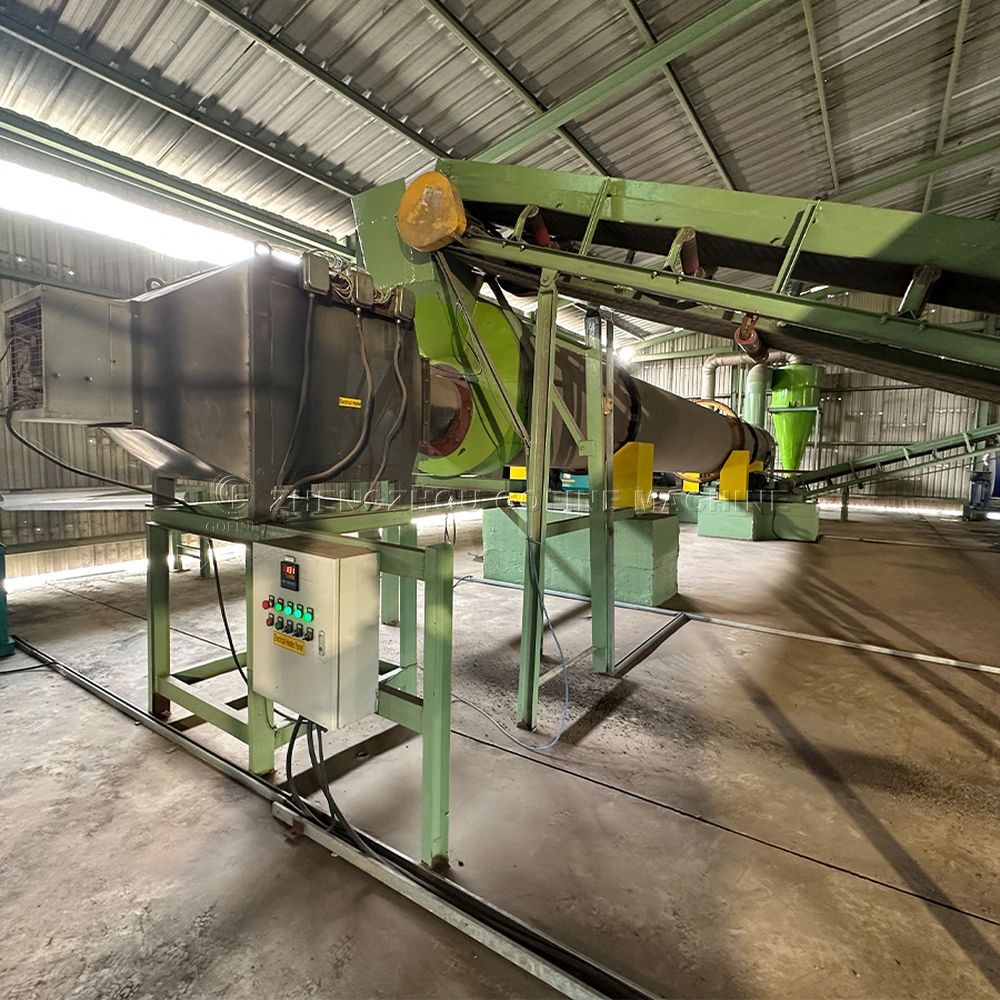
Custom Design Highlights of Automated Inorganic Fertilizer Granulation Line
The custom design is the core advantage that distinguishes the automated inorganic fertilizer granulation line from conventional production lines. It can be tailored according to users’ actual production needs, realizing the optimal combination of equipment and production, and maximizing production efficiency and economic benefits. The main custom design highlights are as follows:
1. Production Capacity Customization
Production capacity can be customized according to users’ actual needs, ranging from small-scale daily output of 10-50 tons to large-scale daily output of 100-500 tons. For small and medium-sized enterprises with limited investment, a small-scale production line can be customized to avoid equipment idleness; for large-scale chemical fertilizer plants with large market demand, a large-scale continuous production line can be customized to meet the large-volume production needs. The annual output can be adjusted from 10,000 to 500,000 tons, with flexible configuration.
2. Raw Material Adaptation Customization
Different inorganic raw materials have different physical and chemical properties, and the production line can be customized according to the type of raw materials used by users. For example, for raw materials with high moisture content, a special dehydrator and dryer can be added to ensure the stability of the granulation process; for heat-sensitive raw materials such as ammonium bicarbonate, a cold extrusion granulation process can be adopted to avoid nutrient loss; for raw materials such as urea and potassium chloride, a dry granulation process can be customized to save energy and reduce consumption. The line can also adapt to various raw material combinations, realizing the production of different types of compound fertilizers.
3. Product Specification Customization
The particle size, shape, and nutrient ratio of the finished product can be customized according to market demand and application scenarios. The particle size can be adjusted between 2-6mm, and spherical, irregular, or other shaped granules can be produced according to needs. The nutrient ratio can be flexibly set, such as 15-15-15, 20-10-10, etc., to meet the nutrient needs of different crops and soil types. For products that need anti-caking treatment, a drum coater can be added to spray mineral oil or polymer coatings (0.2%-0.6%) to improve storage stability.
4. Site Adaptation Customization
The layout of the production line can be customized according to the user’s factory site area and shape. For users with limited site space, a compact vertical layout can be adopted to save floor space; for users with sufficient site space, a horizontal layout can be adopted to facilitate equipment maintenance and operation. The length, width, and height of the equipment can be adjusted according to the site conditions, ensuring that the production line can be smoothly installed and operated in the existing factory.
5. Process and Equipment Configuration Customization
The production process and equipment configuration can be customized according to users’ technical requirements and investment budget. For example, if users pursue high automation, an advanced intelligent control system can be configured to realize remote monitoring and automatic parameter adjustment; if users focus on cost control, a cost-effective equipment combination can be customized while ensuring production efficiency. The granulation equipment can be selected according to needs: disc granulators for small and medium-sized production lines, drum granulators for large-scale production, and double roller extrusion granulators for dry granulation needs.
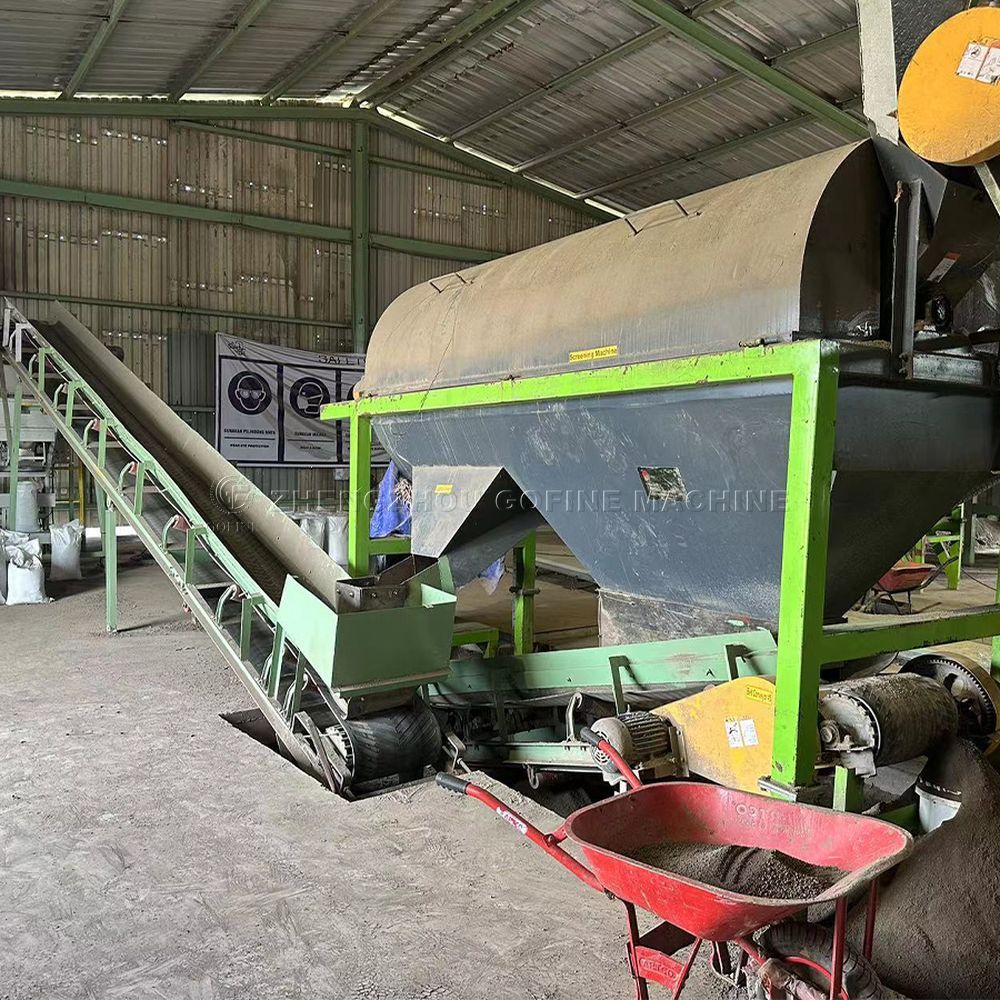
Key Equipment Configuration of the Production Line
The automated inorganic fertilizer granulation line is composed of multiple sets of automated equipment, and the rational configuration of key equipment ensures the stable operation and production efficiency of the entire line. The main key equipment includes:
1. Pretreatment Equipment
Including automated crushers, impurity removers, and dryers. The crusher adopts a high-hardness hammer head, which can effectively crush hard inorganic raw materials without clogging; the impurity remover uses a vibrating screen and magnetic separator to remove impurities such as stones and metal scraps; the dryer is equipped with a temperature sensor and automatic temperature control system to ensure the stability of the drying effect.
2. Automated Batching and Mixing System
Composed of automated batching bins, high-precision electronic scales, loss-in-weight feeders, and horizontal double-shaft mixers. The batching bins store different raw materials separately to avoid cross-contamination; the electronic scales and loss-in-weight feeders ensure the accuracy of the batching ratio, with a single-material weighing error of ≤0.5%; the mixer has no dead corners, ensuring uniform mixing, with a mixing uniformity of over 98%.
3. Automated Granulation Equipment
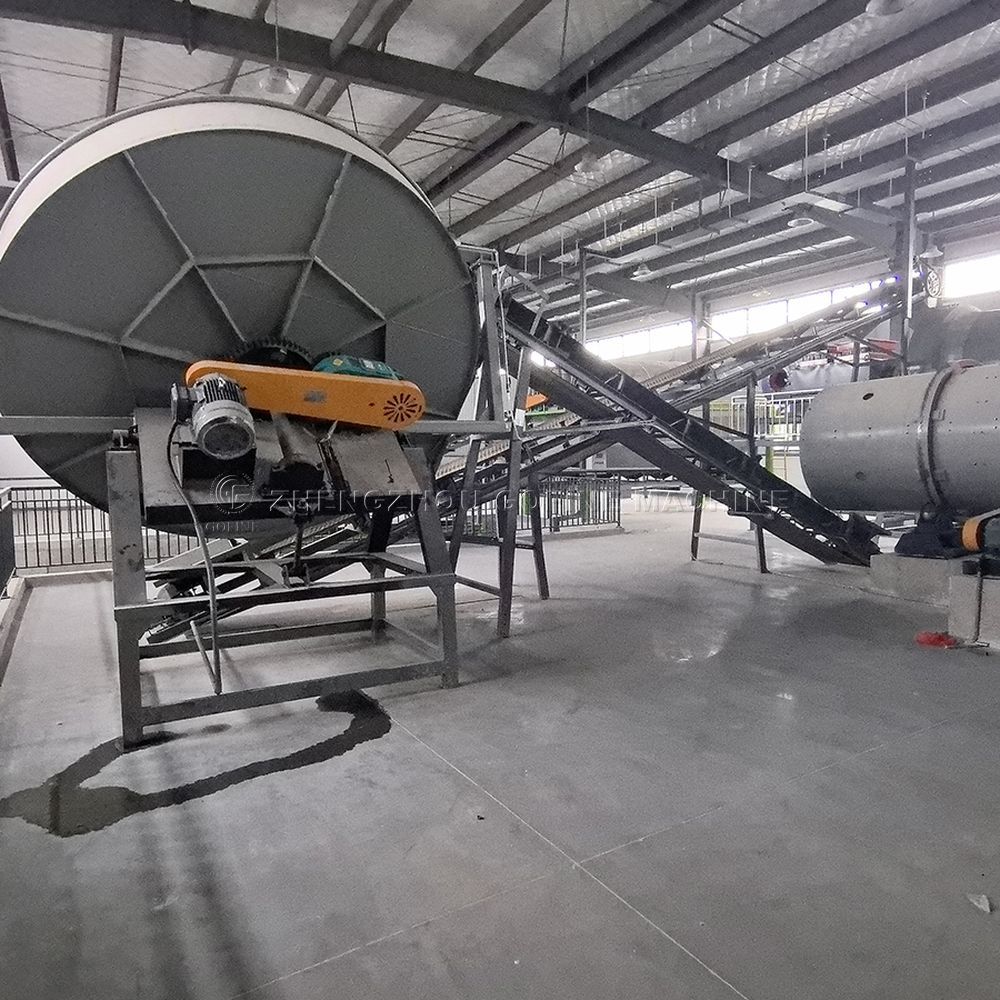
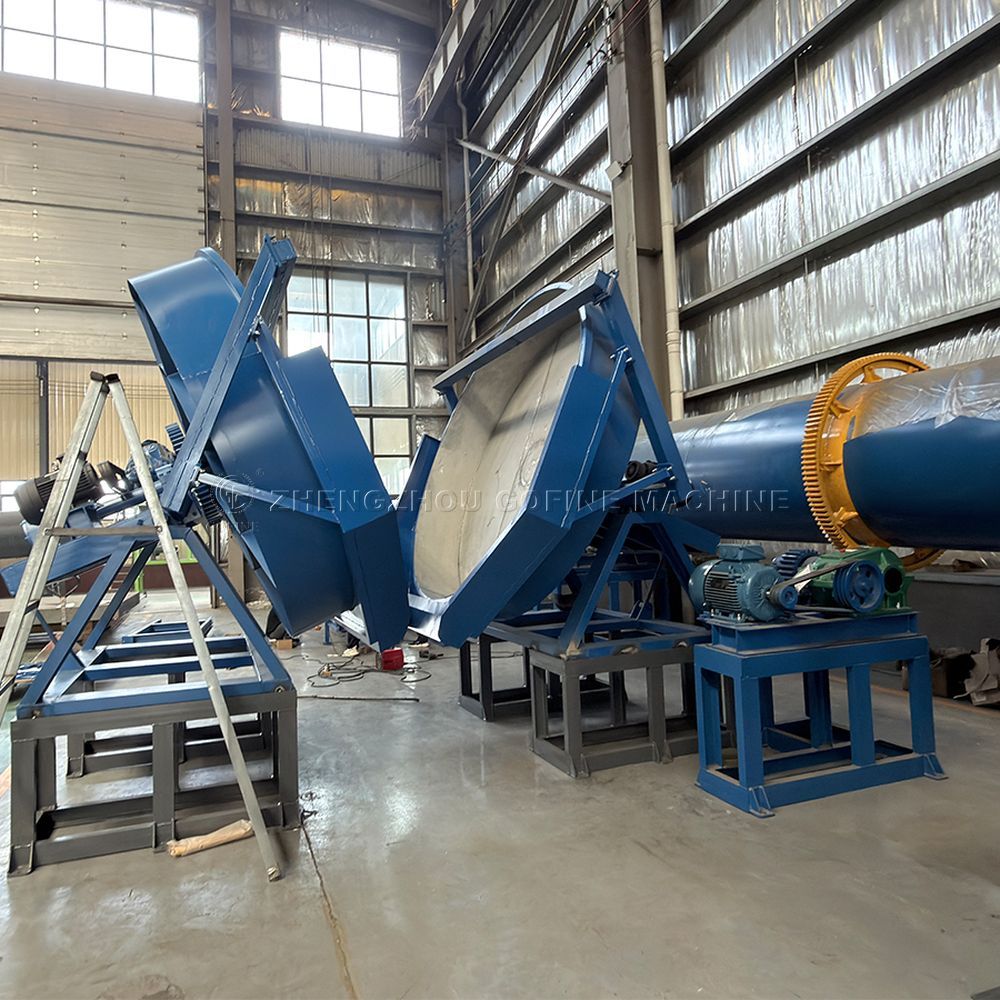
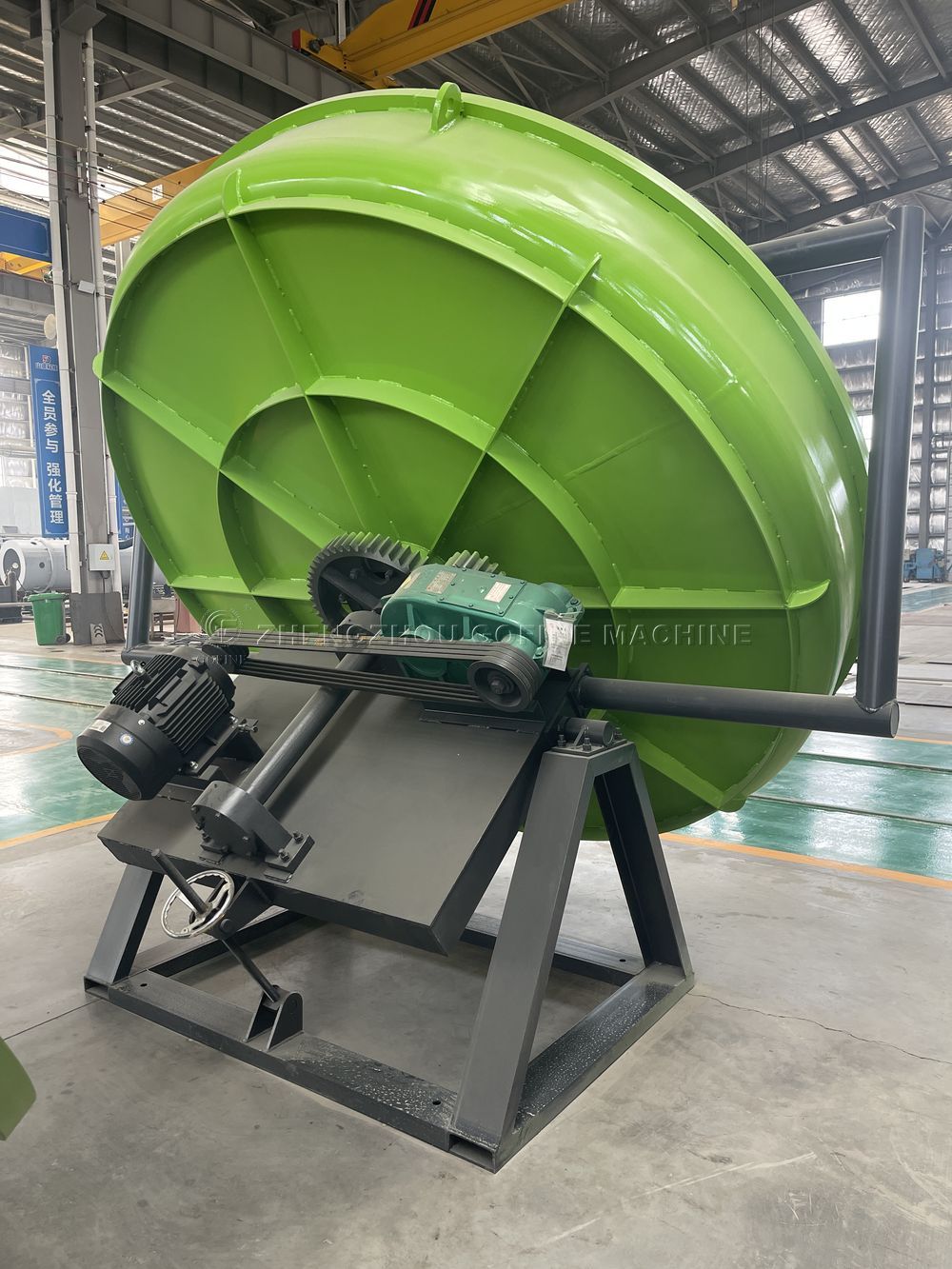
Commonly used are drum granulators, disc granulators, and double roller extrusion granulators. The drum granulator is suitable for large-scale continuous production, with high output and strong adaptability to raw materials; the disc granulator has the advantages of small floor area, low energy consumption, and high granule sphericity (over 90%); the double roller extrusion granulator adopts a dry granulation process, no drying required, reducing energy consumption by 30%-40%, and is suitable for heat-sensitive raw materials.
4. Drying and Cooling Equipment
Including rotary dryers and rotary coolers. The rotary dryer uses direct-fired heating, with adjustable temperature and stable drying effect; the rotary cooler adopts countercurrent cooling design, with fast cooling speed and good effect, ensuring that the particle temperature is reduced to below 40℃ before packaging.
5. Screening and Recycling Equipment
Including double-deck vibrating screens and crushers. The vibrating screen separates qualified particles, undersized particles, and oversized particles; the crusher crushes oversized particles and returns them to the granulator for reprocessing, forming a closed-loop production.
6. Intelligent Control System
The core of the entire production line is the intelligent control system, which integrates PLC controllers, touch screens, and sensors. Operators can set production parameters through the touch screen, and the system automatically controls the operation of each equipment, realizes real-time monitoring of the production process, and issues alarms for abnormalities such as material blockage and temperature deviation, ensuring safe and stable operation. The system also supports formula management, with the ability to pre-set more than 100 formulas and switch quickly.
7. Environmental Protection Equipment
Including baghouse filters and wet scrubbers. The baghouse filters collect dust generated during the crushing and granulation processes, minimizing particulate pollution; the wet scrubbers treat ammonia and acid mists generated during the production process, ensuring that the exhaust gas meets environmental protection standards. The captured fines are returned to the production process to minimize losses.
Core Advantages of Automated Inorganic Fertilizer Granulation Line
Compared with semi-automated or conventional inorganic fertilizer production lines, the automated inorganic fertilizer granulation line with custom design has obvious advantages in production efficiency, product quality, adaptability, and cost control:
1. High Automation, Low Labor Cost
The entire production process from raw material pretreatment to finished product packaging is fully automated, requiring only 3-5 operators to complete the monitoring and operation of the entire line. This greatly reduces the demand for manual labor, avoids the impact of human factors on production efficiency and product quality, and reduces labor costs by more than 60% compared with semi-automated production lines.
2. Customizable Design, Strong Adaptability
The custom design allows the production line to be perfectly matched with users’ production needs, avoiding the waste of equipment investment. Whether it is production capacity, raw material type, product specification, or site layout, it can be flexibly adjusted, adapting to the development needs of different users and improving the practicality and applicability of the production line.
3. Stable Product Quality, High Qualification Rate
The intelligent control system and precise batching system ensure the accuracy of the product formula and the uniformity of nutrient distribution. The automated granulation, drying, and screening links ensure that the finished product has uniform particle size, high strength, and a qualification rate of over 95%. The product quality meets national inorganic fertilizer standards, with stable fertilizer efficiency and good market competitiveness.
4. High Production Efficiency, Suitable for Large-Scale Production
The production line adopts a continuous production mode, which can operate 24 hours a day, with high production capacity. The customized production capacity can meet the needs of different scales of production, and the modular design allows for flexible expansion of the production line as the user’s production scale expands. The production efficiency is far higher than that of semi-automated production lines, ensuring the continuity and stability of large-scale production.
5. Energy Saving and Environmental Protection, Green Production
The production line is equipped with a complete environmental protection system, which effectively treats dust, exhaust gas, and other pollutants, meeting national environmental protection standards. The optimized process design and energy-saving equipment reduce energy consumption and water resource waste. For example, the dry granulation process eliminates the need for drying, reducing energy consumption by 30%-40%. The closed-loop recycling of unqualified particles reduces raw material waste, realizing green and clean production.
6. Durable Structure, Low Maintenance Cost
The key components of the equipment are made of high-quality materials such as high-manganese steel and 304 stainless steel, which have strong corrosion resistance, wear resistance, and pressure resistance. The equipment adopts mature manufacturing processes, with reasonable structural design, low failure rate, and a service life of 10-15 years with proper maintenance. The equipment is easy to disassemble and maintain, and the key components are easy to replace, reducing maintenance costs and downtime loss.
Application Scope of Automated Inorganic Fertilizer Granulation Line
Due to its advantages of automation, customizability, and strong adaptability, the automated inorganic fertilizer granulation line is widely used in various inorganic fertilizer production scenarios, covering different scales and types of production enterprises:
1. Inorganic Fertilizer Production Enterprises
Suitable for small, medium, and large-scale inorganic fertilizer production enterprises, which can produce nitrogen fertilizers, phosphorus fertilizers, potassium fertilizers, compound fertilizers, and other products. The custom design allows enterprises to adjust the production line according to market demand, produce products with different specifications and nutrient ratios, and enhance market competitiveness.
2. Chemical Fertilizer Plants
Chemical fertilizer plants that produce inorganic chemical raw materials can use the production line to process raw materials into granular inorganic fertilizers, extending the industrial chain and improving product added value. The automated production mode reduces labor costs and improves production efficiency, which is suitable for large-scale continuous production.
3. Large-Scale Agricultural Cooperatives and Planting Bases
Large-scale agricultural cooperatives and planting bases with large fertilizer demand can build their own automated inorganic fertilizer granulation lines, producing inorganic fertilizers suitable for their own planting crops according to soil conditions and crop needs. This not only reduces the cost of purchasing fertilizers but also ensures the quality and safety of fertilizers.
4. Environmental Protection and Chemical Projects
In chemical projects and environmental protection projects, the production line can be used to process industrial by-products into inorganic fertilizers, realizing the resource utilization of industrial waste and reducing environmental pollution. For example, processing desulfurized gypsum into phosphorus fertilizer, realizing the dual goals of environmental protection and economic benefits.
Operation and Maintenance of the Production Line
Although the automated inorganic fertilizer granulation line is highly automated and easy to operate, regular operation and maintenance are essential to ensure its long-term stable operation and extend its service life:
1. Operation Guidelines
Operators need to undergo professional training before operation, master the use of the intelligent control system, and be familiar with the operation steps of each equipment. Before starting the production line, check whether each equipment is normal, whether the connecting parts are loose, and whether the lubricating oil is sufficient. Set the correct production parameters according to the production needs, and start the equipment in sequence. During operation, monitor the operation status of the production line in real time, and shut down the machine in time to handle abnormalities such as material blockage and temperature deviation. After production, clean the equipment and shut down in sequence.
2. Key Maintenance Points
Regularly inspect the key components of each equipment, such as crusher blades, mixer paddles, granulator linings, and dryer heating pipes, and replace them in time if they are severely worn. Add lubricating oil to the transmission parts such as bearings and reducers regularly to reduce friction and extend the service life of the equipment. Clean the batching bins, mixer, granulator, and drying equipment regularly to avoid material caking and corrosion. Calibrate the electronic scales, sensors, and control system regularly to ensure the accuracy of parameters. Conduct an overall inspection and maintenance of the production line every six months to one year, and replace aging parts in time to avoid major failures. Clean the environmental protection equipment regularly to ensure its normal operation and environmental protection effect.
Conclusion
Automated inorganic fertilizer granulation lines with custom design available have become the core equipment for the large-scale and standardized production of inorganic fertilizers. They integrate automation, customizability, and environmental protection, realizing the full-process intelligent operation of inorganic fertilizer production, and can be tailored according to users’ actual needs to maximize production efficiency and economic benefits.
With the continuous development of modern agriculture and the increasing demand for high-quality inorganic fertilizers, the demand for automated inorganic fertilizer granulation lines with custom design will continue to grow. The custom design solves the problem that conventional production lines cannot match diverse production needs, while the automated production mode reduces labor costs and improves product quality. For enterprises engaged in inorganic fertilizer production, choosing an automated inorganic fertilizer granulation line with custom design is an important investment to achieve sustainable development, which can not only help enterprises reduce costs and increase efficiency but also promote the healthy development of the inorganic fertilizer industry and modern agriculture.
Related Content
Latest News
- Stainless Steel Disc Granulator for Bentonite Cat Litter Production Line
- Heavy-Duty Pan Granulator: Unique Rotary Scraper Design for Maximum Disc Area Utilization
- Mobile Lab Mini Briquette Press: 5mm Explosion-Proof Roll Compactor for Chemical & Fertilizer R&
- Custom Bar-Type Double Roller Extrusion Granulator: High-Yield Production of Irregular Strip Granule
- Custom Double Roller Extrusion Granulator | Dust-Free Roller Compactor
- High-Capacity Rotary Drum Granulator: The Core Solution for NPK & Compound Fertilizer Production
- Compound Fertilizer Cage Crusher with Screw Feeder | Non-Clogging Crusher
- Fertilizer Granulator Machines: Transforming Compost Powder into Premium Pelleted Fertilizer