


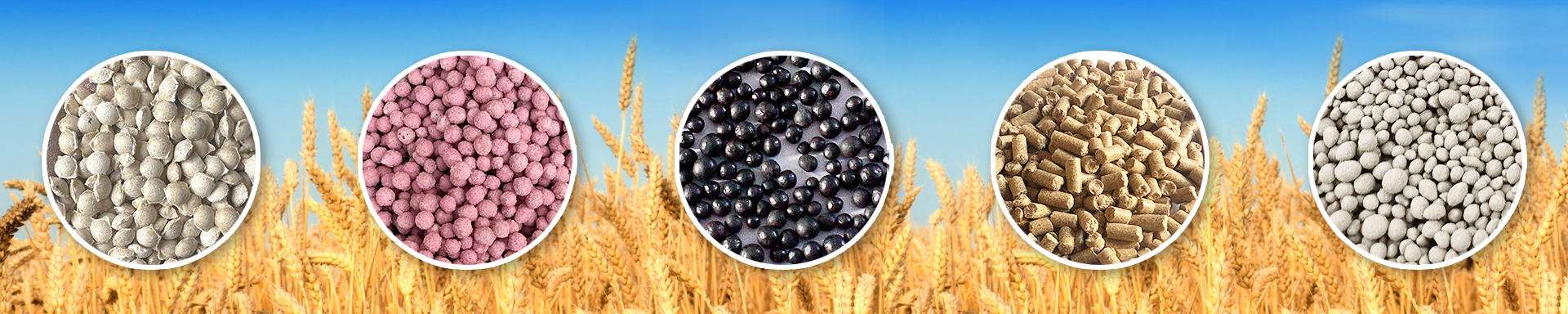
Eco-Friendly Organic Fertilizer Granulation Line | High Efficiency Pelletizing
Published on: 2026-05-19In an era where sustainable agriculture and environmental protection are global priorities, the demand for eco-friendly organic fertilizer production solutions is soaring. An eco-friendly organic fertilizer granulation line not only turns organic waste into valuable nutrients for crops but also minimizes environmental impact while ensuring high-efficiency pelletizing. Whether you’re a small-scale farm, a large fertilizer manufacturer, or an enterprise focusing on organic waste recycling, investing in a high-quality eco-friendly granulation line is the key to reducing costs, improving product quality, and gaining a competitive edge in the global market. This article dives into the core advantages, working principles, key components, and application value of eco-friendly organic fertilizer granulation lines, helping you understand how to choose and utilize this equipment to achieve sustainable development and high returns.
What Is an Eco-Friendly Organic Fertilizer Granulation Line?
An eco-friendly organic fertilizer granulation line is a complete set of equipment designed to process organic raw materials (such as livestock manure, crop straw, kitchen waste, municipal sludge, and compost) into uniform, high-quality organic fertilizer pellets through environmentally friendly and efficient processes. Unlike traditional granulation lines that may produce pollution or waste resources, eco-friendly models integrate energy-saving, emission-reducing, and resource-recycling technologies, ensuring that the entire production process meets global environmental standards while achieving high-efficiency pelletizing.
The core goal of this equipment is to realize the recycling of organic waste—turning waste that would otherwise pollute the environment into organic fertilizer pellets that can improve soil quality, promote crop growth, and reduce the use of chemical fertilizers. With the continuous tightening of environmental policies worldwide and the growing demand for organic agricultural products, eco-friendly organic fertilizer granulation lines have become an indispensable part of modern agriculture and environmental protection industries.
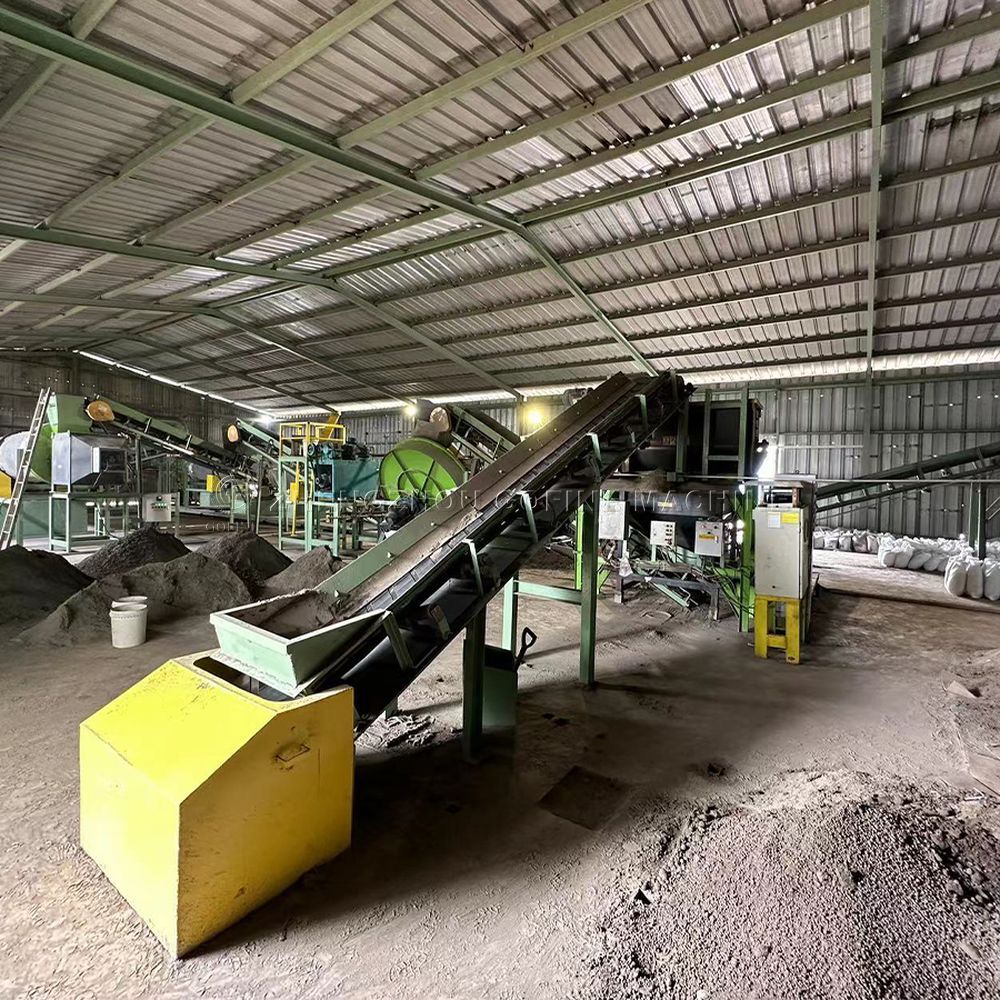
Core Advantages of Eco-Friendly Organic Fertilizer Granulation Line
The popularity of eco-friendly organic fertilizer granulation lines lies in their unique combination of environmental protection and high efficiency, which solves the pain points of traditional fertilizer production. Below are the key advantages that make them stand out in the market:
1. Superior Environmental Protection Performance
Eco-friendly granulation lines adopt advanced pollution control technologies to minimize environmental impact during production. The closed-loop design prevents dust, odor, and wastewater leakage—key issues in traditional granulation. For example, the fermentation process uses aerobic fermentation technology to decompose organic waste at 55-70℃, killing pathogens, eggs, and weed seeds while reducing odor emissions. Additionally, supporting deodorization systems (such as biological filter pools and activated carbon adsorption) and wastewater treatment facilities ensure that exhaust gas and wastewater meet emission standards, avoiding secondary pollution to the surrounding environment. This not only complies with global environmental regulations but also helps enterprises avoid environmental fines and build a green brand image.
2. High-Efficiency Pelletizing for Mass Production
Efficiency is a core requirement for fertilizer manufacturers, and eco-friendly organic fertilizer granulation lines excel in high-speed, stable pelletizing. Equipped with advanced granulating equipment (such as stirring tooth granulators, disc granulators, or double-roll extrusion granulators), these lines can achieve a pelletizing rate of over 90%, with uniform particle size (adjustable from 1-8mm) and high particle strength, reducing waste during transportation and storage. The whole line adopts automated control, from raw material pretreatment to finished product packaging, which greatly reduces manual intervention, improves production efficiency by 30% compared with traditional manual or semi-automatic lines, and supports large-scale production with a daily processing capacity of 50-200 tons or more.
3. Energy-Saving and Cost-Reducing Design
Eco-friendly does not mean high cost—on the contrary, these granulation lines are designed to save energy and reduce operating costs. By optimizing the power transmission system and process flow, energy consumption is reduced by 20%-25% compared with traditional equipment. Some models (such as double-roll extrusion granulators) do not require dryers and coolers, which significantly saves capital investment and energy consumption for equipment operation. Moreover, the raw materials used are low-cost or even free organic waste (such as livestock manure from local farmers or crop straw), which reduces raw material costs while solving the problem of organic waste disposal for farms and enterprises.
4. High-Quality Pellet Products with Strong Market Competitiveness
The pellets produced by eco-friendly granulation lines have obvious advantages in quality. The uniform particle size and high hardness make them easy to store, transport, and apply (suitable for mechanical fertilization), reducing dust and nutrient loss. The organic fertilizer pellets are rich in nitrogen, phosphorus, potassium, and organic matter (organic matter content ≥30%), which can improve soil structure, enhance soil water and fertilizer retention capacity, promote crop root development, and improve crop quality and yield. These high-quality pellets are favored by organic farmers and agricultural enterprises, with a market price 2-3 times that of ordinary compost, bringing higher economic benefits to manufacturers.
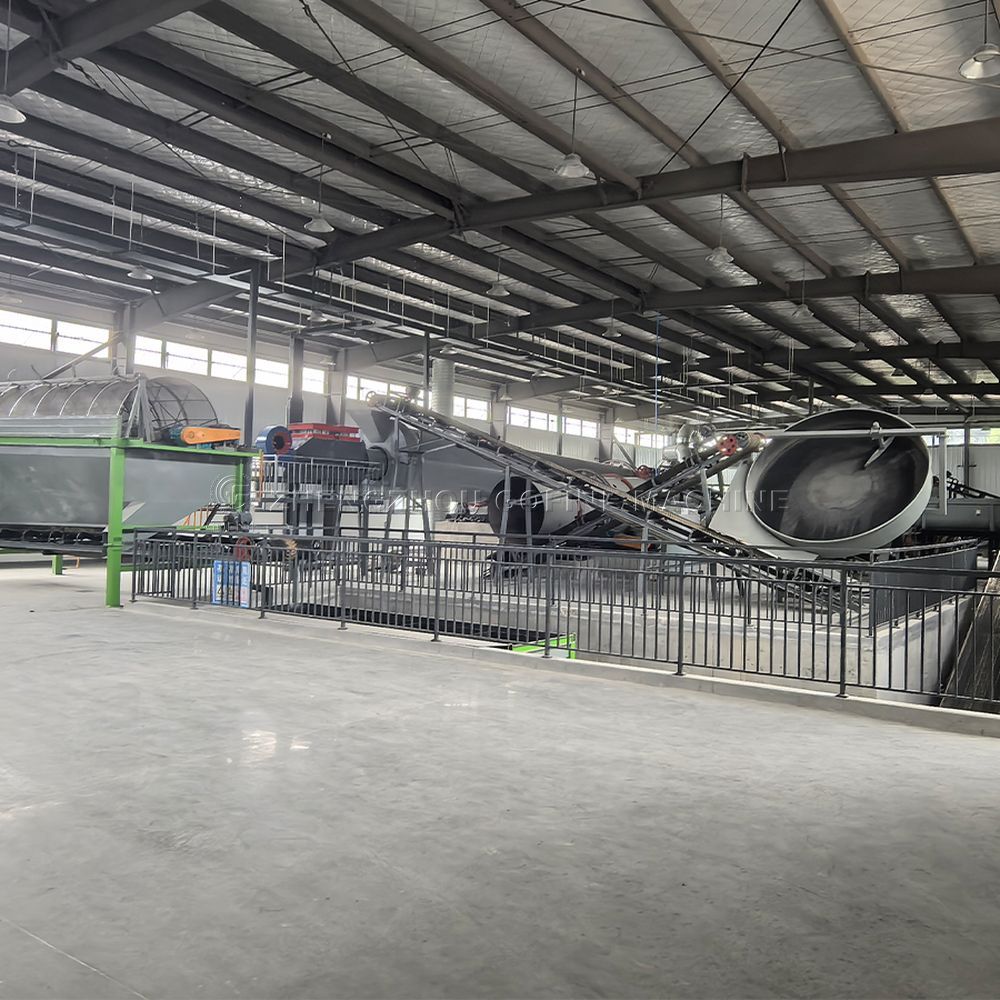
Key Components of an Eco-Friendly Organic Fertilizer Granulation Line
A complete eco-friendly organic fertilizer granulation line is composed of multiple coordinated components, each playing a key role in ensuring the smooth operation of the production process and the quality of finished pellets. The core components include:
1. Raw Material Pretreatment Equipment
Raw material pretreatment is the foundation of high-quality pelletizing. This link includes crushers, mixers, and moisture regulators. The crusher crushes large organic raw materials (such as crop straw and livestock manure) into fine powder (80 mesh or more) to ensure uniform mixing and granulation. The mixer adjusts the carbon-nitrogen ratio (C/N) of raw materials to 25:1-30:1 and controls the moisture content to 55%-65% (hand-held into a ball without dripping) by adding dry auxiliary materials (such as rice husk) or re-mixing dry fertilizer, creating optimal conditions for subsequent fermentation and granulation.
2. Fermentation Equipment
Fermentation is a key step in turning organic waste into harmless and effective organic fertilizer. The line is equipped with trough-type or crawler-type turning machines, which regularly turn the raw materials to ensure aerobic fermentation, control the temperature at 55-70℃ (maintained for 3-5 days to kill pathogens), and complete the fermentation process in 15-25 days. After fermentation, the raw materials are left to age for 10-15 days to promote the decomposition of macromolecular organic matter into small molecules, improving the stability of fertilizer efficiency.
3. Granulating Equipment
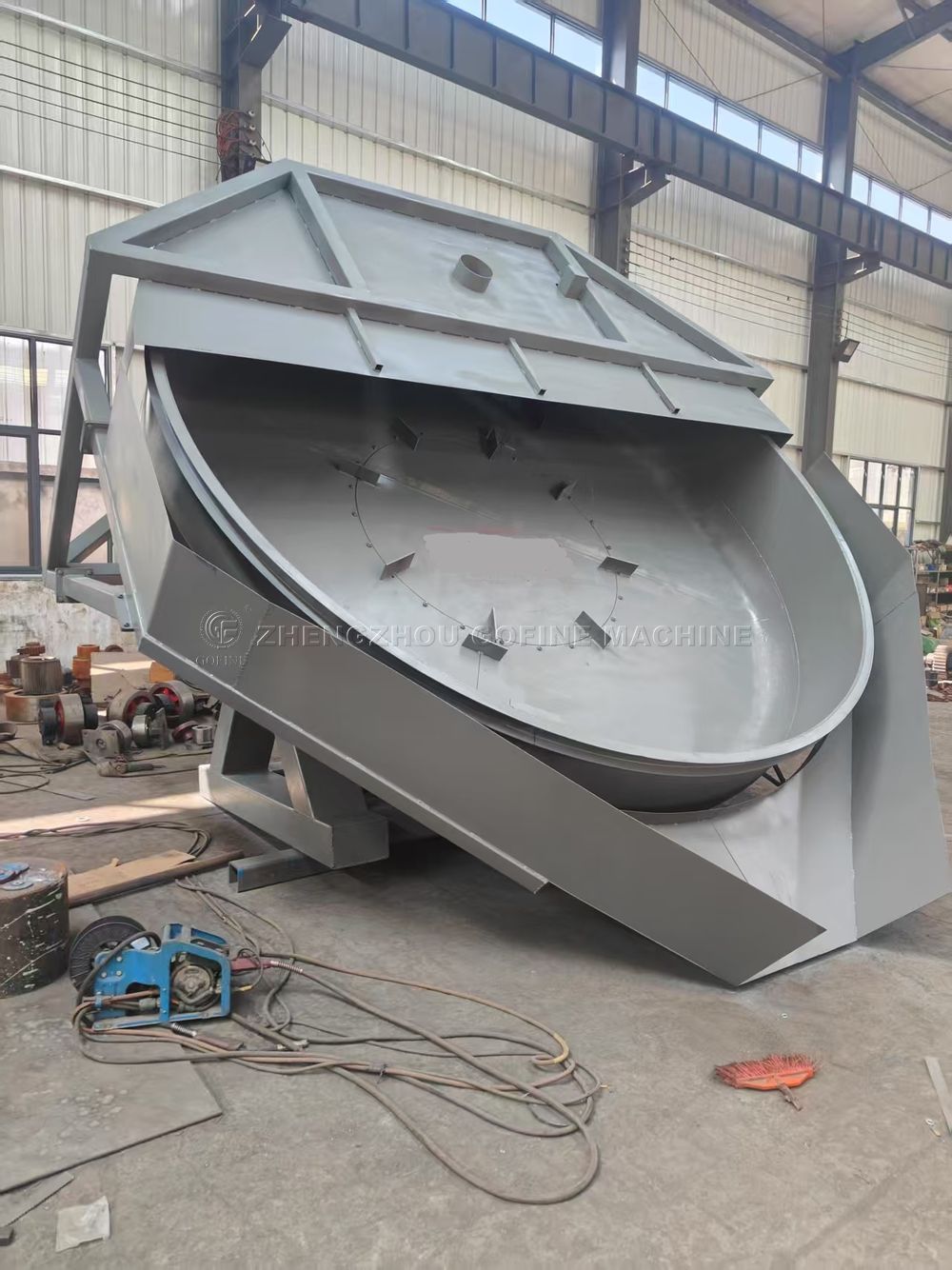
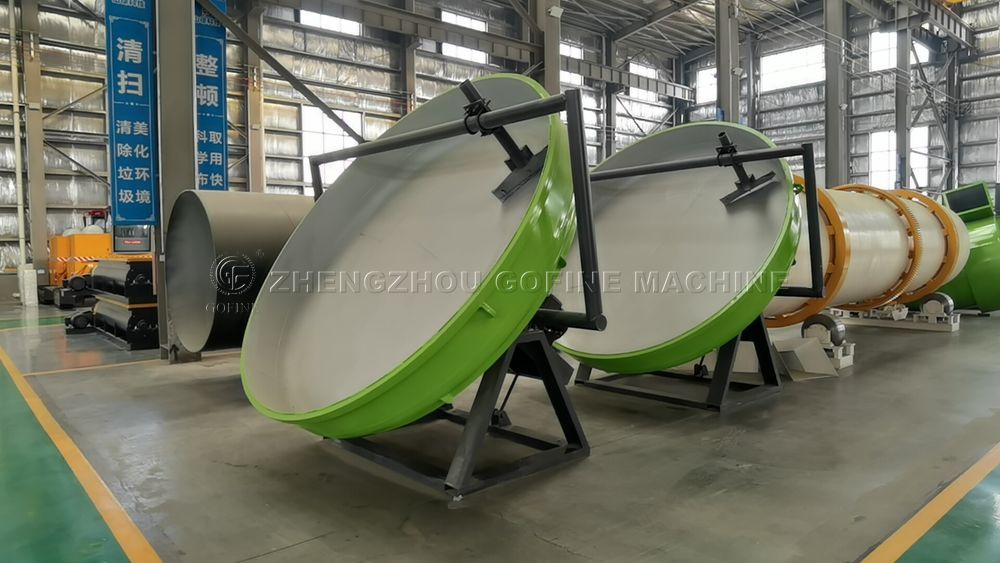
The granulator is the core equipment of the entire line, responsible for converting fermented raw materials into pellets. Common types include: disc granulators (suitable for small and medium-sized production, 1-3t/h, high ball formation rate of over 70%), drum granulators (suitable for large-scale continuous production, 5-20t/h, strong adaptability), and stirring tooth granulators (high granulation rate of over 80%, adjustable particle size, wide adaptability to raw materials). These granulators adopt eco-friendly technologies such as no binder (for extrusion granulation) or natural binders (such as molasses), ensuring the environmental friendliness of the pellets while improving pellet quality.
4. Drying and Cooling Equipment
After granulation, the pellets have high moisture content (about 30%-40), which needs to be dried and cooled to ensure storage stability. The rotary dryer uses hot air (60-80℃) to reduce the moisture content of the pellets to less than 15% (less than 12% for bio-organic fertilizer), avoiding high temperatures from damaging beneficial bacteria. The cooler cools the pellets to room temperature through a cold fan to prevent caking and improve the hardness of the pellets.
5. Screening and Packaging Equipment
The vibrating screen separates qualified pellets (2-5mm) from unqualified ones—oversized pellets are crushed and returned to the granulator, and fine powder is directly reused (return rate 15%-30%), reducing raw material waste. The automatic packaging machine completes weighing, bagging, and sealing, improving packaging efficiency and ensuring the consistency of finished products, which is convenient for storage and transportation.
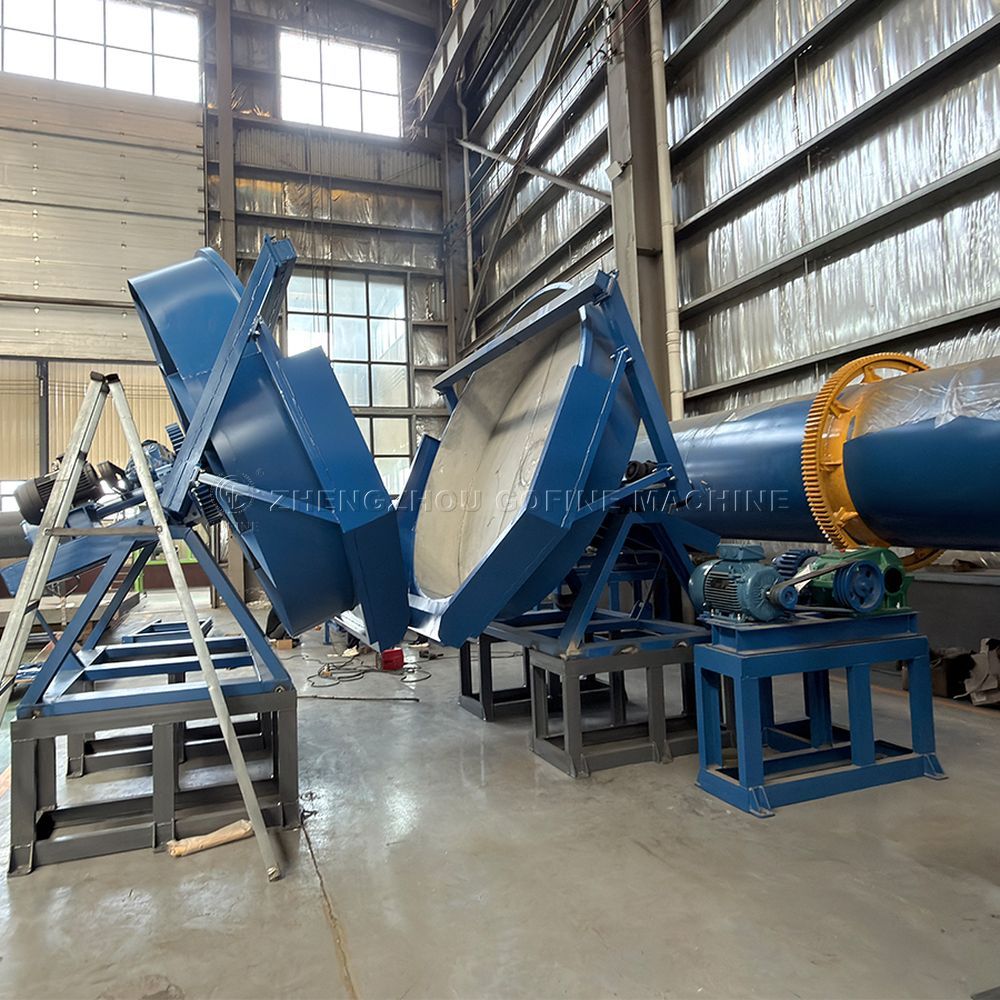
How to Choose the Right Eco-Friendly Organic Fertilizer Granulation Line?
Choosing a suitable eco-friendly organic fertilizer granulation line is crucial to ensuring production efficiency, product quality, and investment returns. When selecting, you need to consider the following factors:
1. Clarify Production Scale and Raw Material Type
First, determine your daily or annual production capacity (small-scale: 1-5t/h, medium-scale: 5-20t/h, large-scale: 20t/h or more) and the type of raw materials (such as livestock manure, crop straw, municipal sludge, etc.). For example, small-scale farms are suitable for disc granulation lines with low investment and simple operation; large-scale fertilizer manufacturers or waste treatment centers can choose drum or stirring tooth granulation lines with large processing capacity and high automation. High-fiber raw materials (such as wood chips and mushroom residue) are suitable for extrusion granulators, while raw materials with high moisture content are suitable for disc or drum granulators.
2. Focus on Environmental Protection and Energy-Saving Performance
When choosing, check whether the equipment meets local environmental standards, including dust removal, deodorization, and wastewater treatment functions. Priority should be given to equipment with energy-saving designs (such as low-power motors, no dryer required, etc.) to reduce long-term operating costs. At the same time, pay attention to the material of the equipment—using wear-resistant and corrosion-resistant materials (such as standard wear-resistant alloy steel) can extend the service life of the equipment and reduce maintenance costs.
3. Consider Automation and Customization Capabilities
Automated control systems (such as PLC touch screen control) can reduce manual intervention, improve production stability, and facilitate real-time monitoring of parameters such as speed, humidity, and temperature, as well as fault self-diagnosis. In addition, different raw materials, production sites, and product requirements require customized solutions—choose manufacturers with strong customization capabilities to avoid the problem of mismatched production capacity or unreasonable process flow caused by applying standard drawings directly.
4. Evaluate After-Sales Service and Manufacturer Strength
Organic fertilizer granulation lines are large-scale equipment that requires professional installation, commissioning, and regular maintenance. Choose manufacturers with a complete after-sales service system, including on-site installation, operator training, and timely supply of accessories, to avoid production interruptions caused by equipment failures. At the same time, prioritize manufacturers with rich project experience, mature technology, and good market reputation—they can provide more professional technical guidance and solutions.
Application Scenarios of Eco-Friendly Organic Fertilizer Granulation Line
Eco-friendly organic fertilizer granulation lines have a wide range of applications, covering agriculture, animal husbandry, environmental protection, and other fields, and are suitable for various types of users:
Livestock and Poultry Farms: Process livestock manure (such as pig manure, chicken manure, and cow manure) into organic fertilizer, solving the problem of manure pollution while creating additional economic benefits. For example, a farm with an annual output of 100,000 live pigs can process 20,000 tons of manure per year with a supporting granulation line, reducing COD emissions by about 80 tons and ammonia nitrogen emissions by about 15 tons.
Organic Fertilizer Manufacturers: Produce high-quality organic fertilizer pellets on a large scale to meet the market demand for organic agricultural products, and gain competitive advantages through eco-friendly and high-efficiency production.
Municipal Waste Treatment Centers: Process kitchen waste and municipal sludge into organic fertilizer, realizing the recycling of urban organic waste and reducing environmental pressure.
Large-Scale Planting Bases: Build their own granulation lines to produce organic fertilizer that meets the needs of their crops, reducing the cost of purchasing chemical fertilizers and improving the quality of agricultural products.
Future Trends of Eco-Friendly Organic Fertilizer Granulation Lines
With the deepening of global environmental protection concepts and the rapid development of sustainable agriculture, eco-friendly organic fertilizer granulation lines will show the following development trends:
Intelligent Upgrades: The whole line will move towards centralized control, remote monitoring, and fault early warning, realizing digital operation and maintenance, and reducing the threshold of intelligent application for small and medium-sized projects.
More Focus on Environmental Protection and Closure: Closed fermentation, dust collection, and deodorization will become standard configurations, and the design will be more friendly to the site, avoiding secondary pollution.
Process Optimization for Pain Points: R&D will focus on solving practical pain points such as granulation of high-moisture materials, no dead corners in fermentation, and anti-sticking and anti-clogging of equipment, improving the stability and adaptability of the line.
Integration of Circular Economy: It will be more closely integrated with the "breeding-manure-organic fertilizer-planting" closed-loop model, promoting the sustainable development of agriculture and environmental protection industries.
Conclusion
An eco-friendly organic fertilizer granulation line is not only a key equipment for organic waste recycling and environmental protection but also a powerful tool for fertilizer manufacturers to improve efficiency, reduce costs, and enhance market competitiveness. Its combination of environmental protection and high efficiency meets the global development trend of sustainable agriculture and environmental protection, and has broad market prospects.
When choosing an eco-friendly organic fertilizer granulation line, it is necessary to comprehensively consider factors such as production scale, raw material type, environmental protection performance, and after-sales service, and select a suitable solution to maximize investment returns. With the continuous advancement of technology, eco-friendly organic fertilizer granulation lines will play a more important role in promoting the green transformation of agriculture and the recycling of resources.
Related Content
Latest News
- Gofine Machinery Wins Turnkey Phosphate Fertilizer Line Project for Global Top 5 Giant
- Crawler Compost Turner: Remote Control & Cab Models | Factory Direct
- Stainless Steel Disc Granulator for Bentonite Cat Litter Production Line
- Heavy-Duty Pan Granulator: Unique Rotary Scraper Design for Maximum Disc Area Utilization
- Mobile Lab Mini Briquette Press: 5mm Explosion-Proof Roll Compactor for Chemical & Fertilizer R&
- Custom Bar-Type Double Roller Extrusion Granulator: High-Yield Production of Irregular Strip Granule
- Custom Double Roller Extrusion Granulator | Dust-Free Roller Compactor
- High-Capacity Rotary Drum Granulator: The Core Solution for NPK & Compound Fertilizer Production