


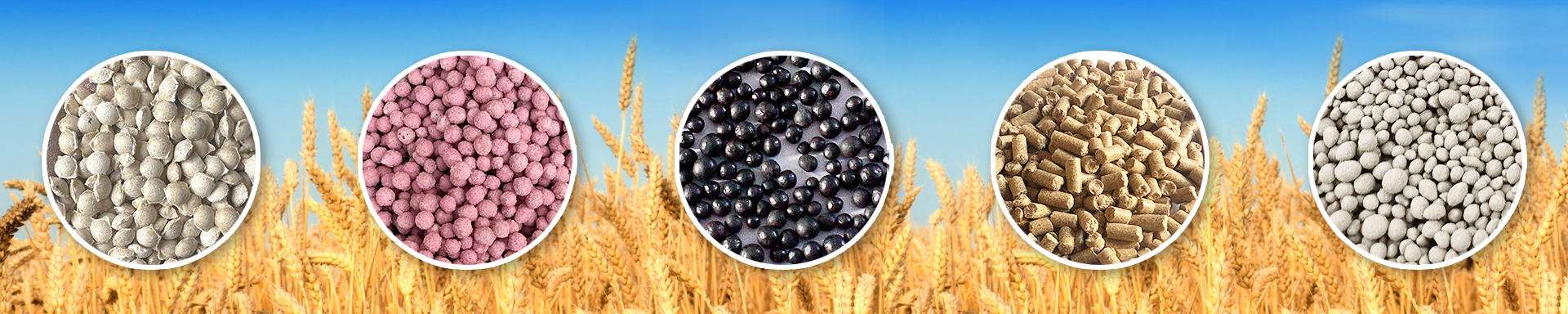
Anti-Caking Coating Machine for NPK & Compound Fertilizer Production
Published on: 2026-08-21Granular NPK, compound fertilizers, and bulk nitrogen salts often absorb atmospheric humidity during transport, long-term storage, and high-moisture ocean freight. As moisture evaporates, microscopic chemical bridges form between particles, turning free-flowing fertilizer into solid, unmanageable blocks.
An industrial anti-caking coating machine provides an essential finishing solution for modern fertilizer manufacturing. Utilizing a specialized liquid and powder coating system for fertilizer, this equipment applies a dual-layer protective barrier—combining liquid coating oil with mineral anti-caking powders—to eliminate moisture absorption and prevent lump formation.
The Core Challenge: Why NPK & Compound Fertilizers Cake
Commercial chemical fertilizers are inherently hygroscopic. Storage challenges in humid regions stem from three primary physical mechanics:
Hygroscopic Moisture Absorption: Chemical compounds like urea, ammonium nitrate, and potassium salts absorb ambient water vapor, creating a micro-liquid film on particle surfaces.
Crystal Bridging: As storage temperatures fluctuate, dissolved surface salts re-crystallize at granule contact points, fusing individual granules into rock-hard cakes.
Dust & Mechanical Friction: Surface dust and high stacking pressure in bulk bags accelerate particle breakdown and surface adhesion.
Installing a dedicated anti-caking agent applicator for NPK fertilizer prevents these interactions, maintaining smooth material flowability from the factory floor to the field.
The Dual-Spray Technology: Liquid Oil + Solid Powder Coating System
Applying a single liquid oil often leaves granules oily or sticky, while applying dry powder alone leads to heavy dust buildup inside packaging. A dual-action fertilizer coating machine overcomes these issues by combining two protective steps:
Phase 1: Liquid Anti-Caking Oil Application: High-pressure atomizing nozzles spray a fine mist of heated mineral oil or amine-based anti-caking liquid onto the tumbling fertilizer bed. This liquid film penetrates micro-pores, sealing the surface against moisture ingress.
Phase 2: Solid Powder Conditioning (Talc / Mineral Dust): Before the liquid layer fully dries, a precise powder feeder injects fine talc, kaolin clay, or diatomaceous earth into the drum. The powder adheres to the oiled surface, forming a dry, smooth physical barrier.
Synergistic Protection: The liquid oil blocks moisture absorption, while the solid powder prevents granules from sticking together, ensuring maximum anti-caking performance under severe ambient conditions.
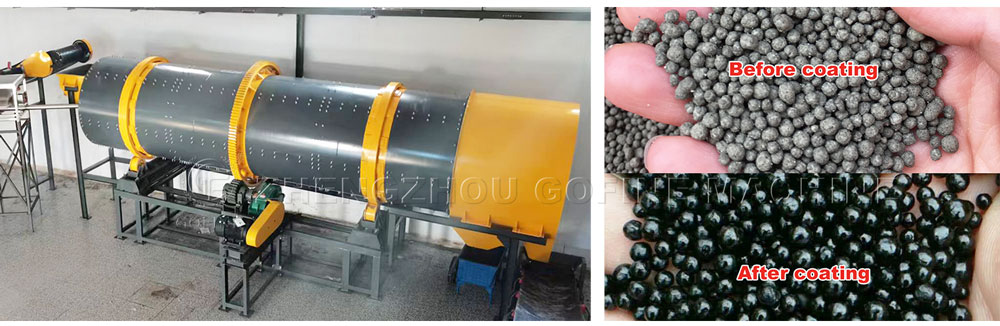
Step-by-Step Anti-Caking Coating Process Workflow
[Qualified NPK Granules] ➔ Pre-Screening ➔ Rotary Coating Drum ➔ Liquid & Powder Dosing ➔ Final Screening ➔ Automated Packaging
Granule Feed & Temperature Control: Qualified 2–5 mm NPK granules enter the coating section at 35°C–45°C to promote optimal oil distribution and adhesion.
Precision Liquid Atomization: The anti-caking agent applicator for NPK fertilizer injects pre-heated coating oil (60°C–80°C) through pneumatic nozzles, coating the tumbling bed evenly.
Solid Powder Uniform Dosing: A loss-in-weight screw feeder dispenses dry anti-caking powder at a controlled ratio into the coating chamber.
Rotary Drum Tumble & Final Screening: Internal flighting turns the granules smoothly to lock in the dual coating. The treated fertilizer then passes through a final sizing screen directly to automated bagging scales.
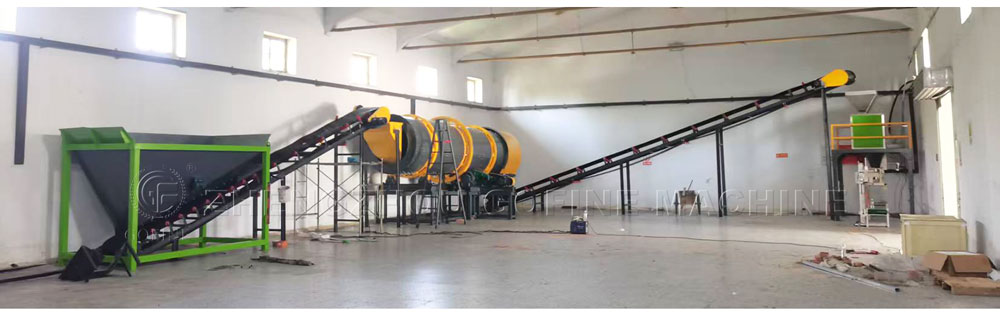
Complete Equipment Configuration List
Gofine Heavy-Duty Rotary Coating Drum: Engineered with anti-stick internal lifters and adjustable drum inclination for smooth granule movement.
Temperature-Controlled Liquid Dosing System: Heated oil storage tank, precision positive-displacement pump, and temperature sensors.
Automated Screw Powder Feeder: Frequency-controlled dosing unit providing continuous, precise feeding of talc or mineral dust.
Pneumatic Atomizing Spray Nozzle Assembly: Clog-resistant spray nozzles designed for uniform liquid atomization at low operating pressures.
Enclosed Dust Collection Hood: Integrated dust extraction manifold to keep the packaging hall clean and free of airborne mineral dust.
Frequently Asked Questions
Q: Why use a dual liquid and powder coating system instead of liquid oil alone?
A: Using liquid oil alone can make granules feel greasy and stain bags. A liquid and powder coating system for fertilizer seals micro-pores with oil while adding a dry mineral powder shell, keeping granule surfaces smooth, dry, and non-sticky.
Q: What is the optimal granule temperature for applying anti-caking agents?
A: NPK granules should enter the anti-caking coating machine at temperatures between 35°C and 45°C. If granules are too hot, the oil may evaporate or degrade; if too cold, the oil hardens rapidly and spreads unevenly.
Q: Can this coating machine process different chemical fertilizer formulations?
A: Yes. This specialized fertilizer coating machine handles NPK compound fertilizers, prilled urea, ammonium sulfate, potassium chloride, and custom dry-blended NPK formulations.
Selecting the Right Anti-Caking Coating Solution
Integrating an industrial anti-caking coating machine into your finishing line ensures long-term storage stability, zero customer complaints regarding caked bags, and optimal product appearance.
Contact the Gofine technical engineering team today for custom equipment drawings, liquid/powder dosing calculations, and direct factory pricing on our rotary coating machine series!
Related Content
Latest News
- Heavy-Duty Pan Granulator: Unique Rotary Scraper Design for Maximum Disc Area Utilization
- Mobile Lab Mini Briquette Press: 5mm Explosion-Proof Roll Compactor for Chemical & Fertilizer R&
- Custom Bar-Type Double Roller Extrusion Granulator: High-Yield Production of Irregular Strip Granule
- Custom Double Roller Extrusion Granulator | Dust-Free Roller Compactor
- High-Capacity Rotary Drum Granulator: The Core Solution for NPK & Compound Fertilizer Production
- Compound Fertilizer Cage Crusher with Screw Feeder | Non-Clogging Crusher
- Fertilizer Granulator Machines: Transforming Compost Powder into Premium Pelleted Fertilizer
- Diesel Semi-Wet Material Crusher: Heavy-Duty Solution for High-Moisture Waste Grinding