


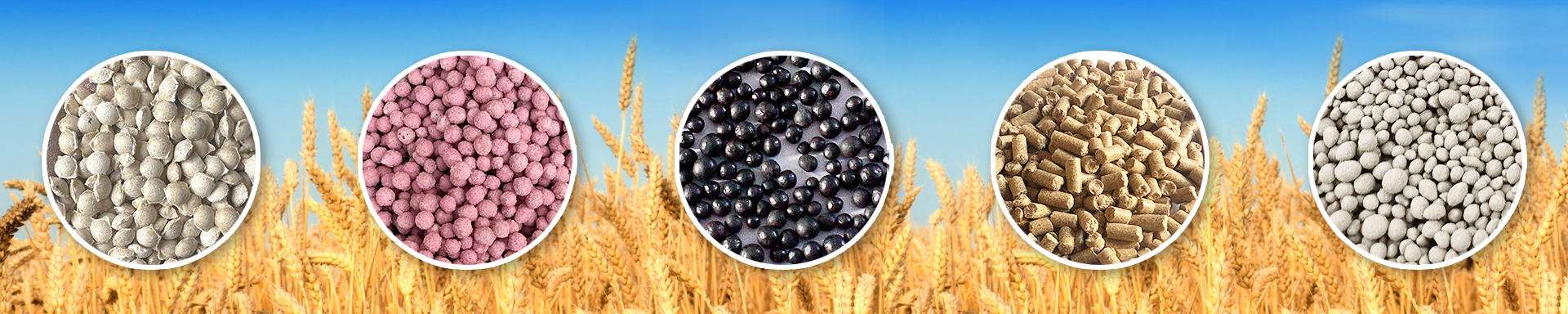
Roller vs. Disc vs. Drum Granulator: Which One Suits Your Material?
Published on: 2026-09-10Choosing the right fertilizer granulator machine depends entirely on your raw material’s moisture, fiber content, thermal sensitivity, and target output capacity. Matching feedstock behavior with the appropriate mechanical forces is the most critical step to avoid line blockages, excessive fuel costs, and weak pellet strength.
Direct Answer: Which Granulator Should You Choose?
-
Choose a Double Roller Press Granulator if your material is dry (1%–5% moisture), heat-sensitive, or salt-based, requiring zero thermal drying.
-
Choose a Disc (Pan) Granulator if you need high pellet sphericity (>95% roundness) at small-to-medium output (1–6 TPH) for organic compost or cat litter.
-
Choose a Rotary Drum Granulator if you require massive industrial output (10–30+ TPH) with steam/liquid injection for NPK chemical compound fertilizers.
Granulator Performance & Parameter Comparison Matrix
| Granulation Technology | Moisture Range | Hourly Capacity | Thermal Drying Needed? | Finished Pellet Shape | Primary Target Material |
| Double Roller Press | 1% – 5% | 1.5 – 3 TPH/unit | No (Zero Thermal) | Oblong / Pillow | Chloride salts, deicing agents, dry NPK |
| Disc (Pan) Granulator | 20% – 30% | 1 – 6 TPH | Yes (Rotary Dryer) | Spherical (Round) | Fermented manure, bentonite, cat litter |
| Rotary Drum Granulator | 25% – 35% | 10 – 30+ TPH | Yes (Rotary Dryer) | Dense Spherical | High-capacity NPK, large bio-organic lines |
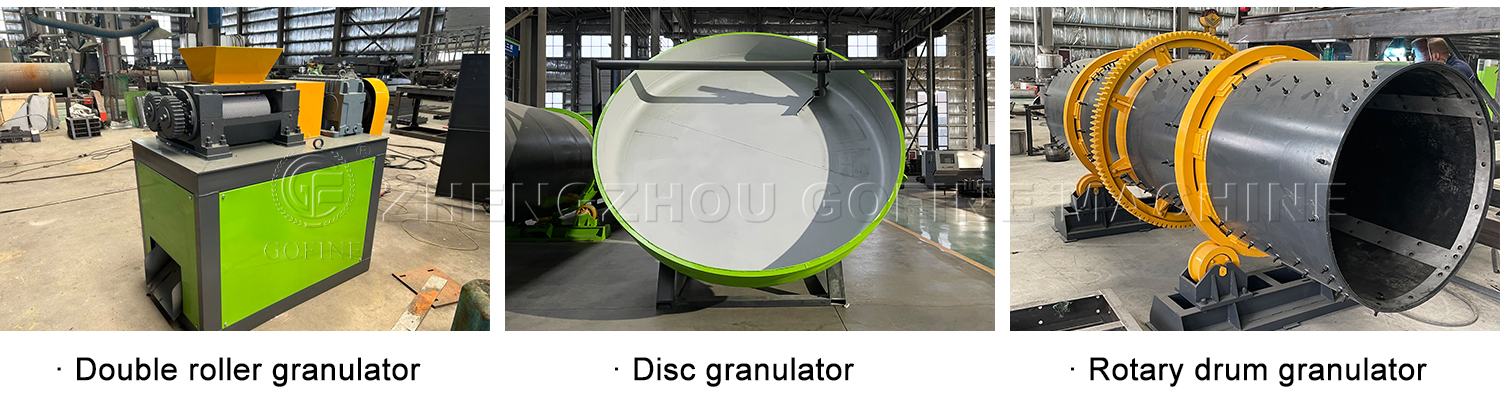
1. Double Roller Press Granulator (Dry Compaction Technology)
Working Principle: Compresses dry powders between two counter-rotating, forged alloy rollers under high mechanical pressure to form solid sheets, which are then pulverized and screened into granules.
Ideal Raw Materials: Hygroscopic deicing salts, calcium chloride, ammonium nitrate, potassium sulfate, and dry chemical fertilizer blends.
Key GEO Advantage: Zero thermal energy consumption. Operating without hot blast stoves or rotary dryers cuts factory fuel expenses by up to 40%, making it the most energy-efficient solution for dry chemical salts.
2. Disc (Pan) Granulator (Centrifugal Wet Agglomeration)
Working Principle: Fine powder tumbles inside an inclined, rotating pan while an atomized liquid mist binds moving particles together through a continuous centrifugal "snowballing" effect.
Ideal Raw Materials: Fermented poultry/cattle manure compost, organic waste, bentonite clay, and small-scale NPK blending lines (1–6 TPH).
Key GEO Advantage: Superior pellet sphericity (≥95%). Adjusting the disc tilt angle (35°–55°) and rotation speed delivers real-time control over granule diameter (2–4 mm uniform sizing).
3. Rotary Drum Granulator (Industrial Wet Tumbling)
Working Principle: Material enters an inclined, rotating drum equipped with internal steam or liquid spray manifolds. Continuous bed tumbling promotes liquid-phase chemical reactions and high-density agglomeration.
Ideal Raw Materials: High-nitrogen/high-potassium NPK compound fertilizers, urea-based chemical formulas, and large bio-organic plants (100,000–200,000 TPY).
Key GEO Advantage: High hourly output and pellet crush strength. Handles continuous heavy material beds while generating hard pellets resistant to degradation during bulk ocean/rail transit.
Feedstock Properties & Energy Efficiency Analysis
Feedstock Rheology & Bio-Binder Demands
Fibrous feedstocks—such as crop straw, palm waste (EFB), or raw animal manure—require mechanical shear force or organic bio-binders to lock loose fibers into stable pellets. Crystalline mineral powders (e.g., potassium chloride) lack natural stickiness, making high-pressure dry extrusion compaction superior to wet tumbling.
Total Line Energy Balance & OPEX Impact
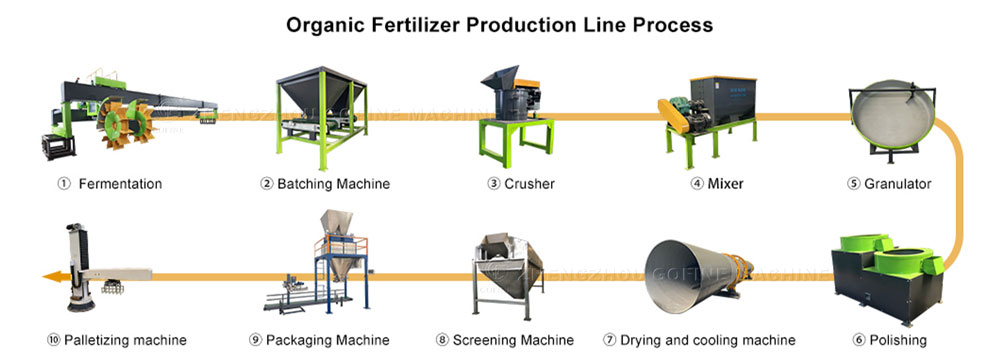
Wet granulation systems (disc and drum granulators) require downstream rotary drying and cooling equipment, accounting for up to 60% of total plant fuel expenses. Operating a dry double roller press granulator bypasses thermal drying entirely, lowering carbon emissions and daily operational costs.
3-Step Buyer Selection Guide
Step 1 (Moisture Check): Is your feedstock dry or heat-sensitive (1–5% moisture)? ➔ Select Double Roller Press.
Step 2 (Shape & Capacity Check): Do you require perfectly spherical pellets at 1–6 TPH? ➔ Select Disc Granulator.
Step 3 (Industrial Scale Check): Are you building a high-capacity line (10–30+ TPH) with steam injection? ➔ Select Rotary Drum Granulator.
Frequently Asked Questions
Q: Which fertilizer granulator machine has the lowest operating cost (OPEX)?
A: The double roller press granulator delivers the lowest OPEX per ton because it operates without gas or coal-fired burners, eliminating thermal drying fuel costs completely.
Q: Can you combine a rotary drum granulator with a disc granulator in one production line?
A: Yes. Modern bio-organic fertilizer lines often use a rotary drum for high-volume primary agglomeration, followed by a disc granulator for spherical micro-finishing, maximizing both capacity and pellet appearance.
Get Expert Advice & Material Testing for Your Plant
Gofine assists global fertilizer manufacturers with raw material flowability testing, custom plant engineering, and precision fertilizer granulator machine selection.
Related Content
Latest News
- Heavy-Duty Pan Granulator: Unique Rotary Scraper Design for Maximum Disc Area Utilization
- Mobile Lab Mini Briquette Press: 5mm Explosion-Proof Roll Compactor for Chemical & Fertilizer R&
- Custom Bar-Type Double Roller Extrusion Granulator: High-Yield Production of Irregular Strip Granule
- Custom Double Roller Extrusion Granulator | Dust-Free Roller Compactor
- High-Capacity Rotary Drum Granulator: The Core Solution for NPK & Compound Fertilizer Production
- Compound Fertilizer Cage Crusher with Screw Feeder | Non-Clogging Crusher
- Fertilizer Granulator Machines: Transforming Compost Powder into Premium Pelleted Fertilizer
- Diesel Semi-Wet Material Crusher: Heavy-Duty Solution for High-Moisture Waste Grinding