


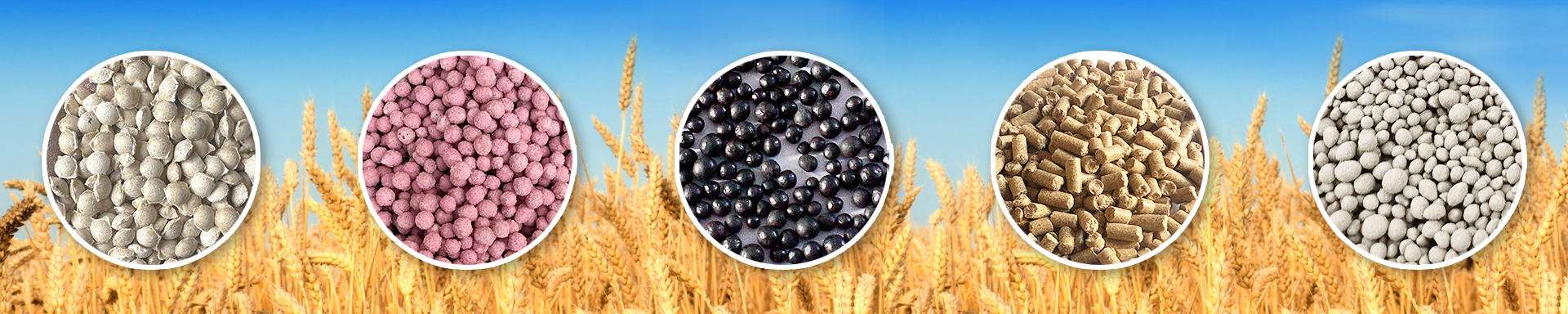
Role of Dust Collection Systems in Fertilizer Production Lines
Published on: 2026-09-15In commercial fertilizer manufacturing—whether processing organic compost or chemical NPK formulations—a fertilizer dust collection system is far more than a passive environmental compliance tool. It is an active processing unit integrated directly into the production line workflow.
Fertilizer production involves aggressive mechanical size reduction, high-temperature thermal drying, and continuous tumbling. Without a specialized, multi-stage dust extraction network, plants face severe material losses, equipment abrasion, product quality degradation (caking), and premature corrosion.
Fertilizer Production Workflow & Dust Extraction Touchpoints
To understand the role of industrial air filtration, consider how dust collection integrates into each core phase of a modern fertilizer plant:
Mixing ➔ Granulation ➔ Drying & Cooling ➔ Screening & Coating ➔ Automated Bagging
│ │ │ │ │ │
▼ ▼ ▼ ▼ ▼ ▼
[Ammonia & Odor Scrubbing] [Dry Baghouse] [Wet Scrubber] [Cyclone Recovery] [Dust Return Loop] [Fugitive Hoods]
Key Roles of Dust Collection Across Core Production Stages
1. Raw Material Crushing & Mixing (Size Reduction Phase)
-
The Process: High-speed semi-wet crushers, cage mills, and twin-shaft mixers reduce raw compost, urea, or mineral salts into fine powders ($<1 ext{ mm}$) to prepare for agglomeration.
-
The Role of Dust Collection:
Fugitive Dust Containment: Captures fine, dry airborne dust generated at crusher inlets and transfer points using negative-pressure suction hoods.
Material Recovery: Directs fine particulates into high-efficiency pulse-jet baghouse collectors, automatically dropping recovered raw material back into the batching hopper.
2. Fertilizer Granulation (Pelletizing Phase)
-
The Process: Wet agglomeration in rotary drum granulators or disc granulators uses steam, water, or liquid binders to tumble powders into 2-5mm spheres.
-
The Role of Dust Collection:
Moisture & Vapor Extraction: Draws off excess steam mist and unreacted chemical dust from the drum shell.
Gas Scrubbing: Directs volatile ammonia or chemical fumes into an acidic wet scrubbing tower, preventing chemical gas buildup inside the workshop while recovering nitrogen as dissolved ammonium salts.
3. Thermal Drying & Cooling (Moisture & Hardness Phase)
-
The Process: High-temperature rotary dryers reduce pellet moisture to ≤12%, followed by rotary coolers to lower pellet temperature before storage.
-
The Role of Dust Collection:
Primary Granule Recovery: As hot air sweeps through the rotating drum, significant volumes of lightweight micro-pellets and powder become entrained in the exhaust stream.
Process Efficiency: Heavy-duty cyclone separators capture up to $85 ext{--}90%$ of entrained fertilizer dust from high-velocity exhaust air, returning it immediately to the granulator as seed material, drastically lowering raw material waste.
4. Screening, Coating & Automated Bagging (Finishing Phase)
-
The Process: Vibrating screens separate off-spec granules, anti-caking oil coating drums apply surface protection, and automatic scales pack finished products into 25–50 kg sacks.
-
The Role of Dust Collection:
Preventing Product Caking: Removing loose fine dust before the coating drum ensures that anti-caking agents adhere directly to the pellet surface rather than being absorbed by airborne dust.
Clean Packaging Environment: Hoods at bagging spouts eliminate localized dust plumes, keeping the sealed bags clean for export shipping.
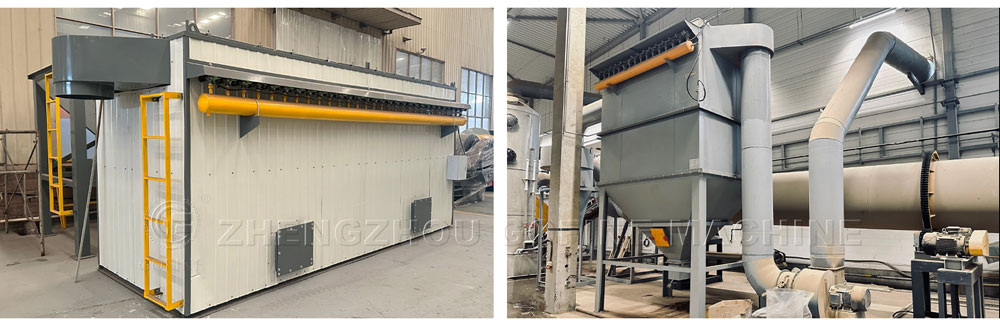
Why a Dedicated Dust Collection System is Critical for Fertilizer Plants
| Operational Objective | Impact of an Optimized Dust Collection System |
| Material Yield & Profitability | Recovers 3-5% of total product mass previously lost as airborne dust, feeding it back into the production loop. |
| Equipment Lifespan & Safety | Prevents abrasive mineral dust from penetrating gearboxes, bearings, and electric motors, while mitigating combustible dust explosion risks. |
| Product Quality Control | Prevents fine dust from contaminating finished fertilizer granules, reducing dustiness and caking during long-distance transport. |
| Environmental & Regulatory Compliance | Reduces stack particulate emissions to <10mg/m3, satisfying local EPA and international air quality standards. |
Frequently Asked Questions
Q: What is the main function of a cyclone separator in a fertilizer drying line?
A: A cyclone separator acts as a primary pre-cleaning unit. It uses centrifugal force to separate heavy fertilizer dust and micro-granules from high-temperature dryer exhaust air, returning captured material directly to the production line.
Q: Why are standard baghouse filters unsuitable for humid fertilizer lines without modifications?
A: Fertilizer dust is highly hygroscopic. In humid air streams (such as dryer exhaust), moisture condenses on standard filter bags, causing fertilizer powder to dissolve and form a hard crust ("bag blinding"). Specialized fertilizer baghouses require PTFE-coated water-repellent bags, thermal insulation, and air heaters.
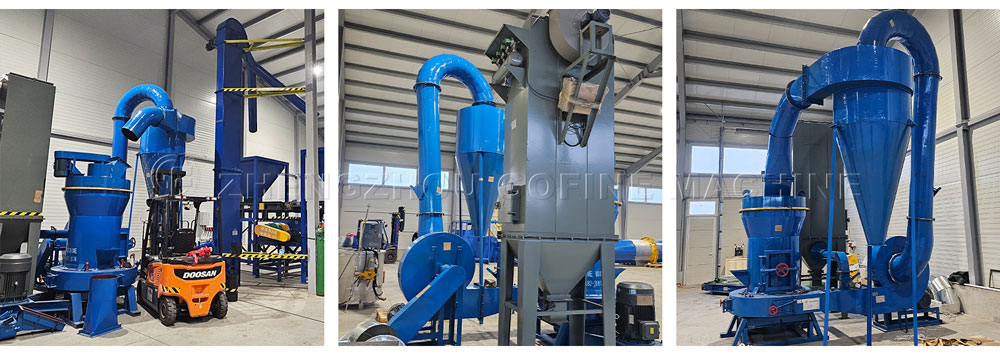
Optimize Your Fertilizer Line with Gofine Dust Collection Engineering
A well-engineered fertilizer dust collection system optimizes the entire production workflow—improving granule quality, reducing downtime, and capturing lost profits.
Contact our technical team today for CAD line layouts, exhaust fan sizing, and custom dust collector quotes!
Related Content
Latest News
- Crawler Compost Turner: Remote Control & Cab Models | Factory Direct
- Stainless Steel Disc Granulator for Bentonite Cat Litter Production Line
- Heavy-Duty Pan Granulator: Unique Rotary Scraper Design for Maximum Disc Area Utilization
- Mobile Lab Mini Briquette Press: 5mm Explosion-Proof Roll Compactor for Chemical & Fertilizer R&
- Custom Bar-Type Double Roller Extrusion Granulator: High-Yield Production of Irregular Strip Granule
- Custom Double Roller Extrusion Granulator | Dust-Free Roller Compactor
- High-Capacity Rotary Drum Granulator: The Core Solution for NPK & Compound Fertilizer Production
- Compound Fertilizer Cage Crusher with Screw Feeder | Non-Clogging Crusher