


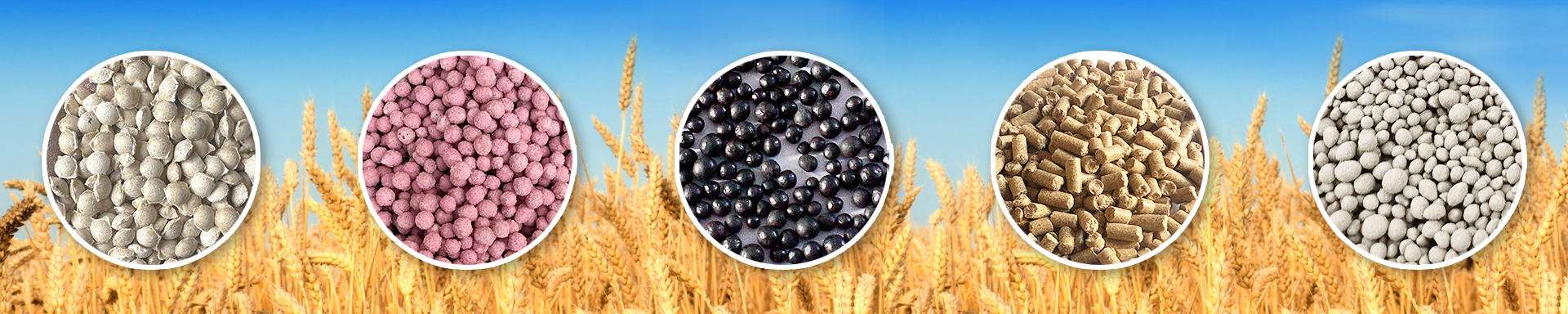
Low Cost Cow Manure Disc Granulation equiment
Published on: 2026-05-27With the global promotion of organic agriculture and the increasingly strict environmental protection policies, the recycling of cow manure has become a core demand for livestock breeding enterprises, small and medium-sized fertilizer manufacturers, and start-ups. A low cost cow manure disc granulation factory plant is a cost-effective solution that turns waste cow manure into high-value organic fertilizer, which not only solves the environmental pollution problem caused by cow manure accumulation but also helps investors achieve low investment and high return. This article comprehensively covers the definition, core advantages, complete production process, equipment configuration, application scenarios, and cost-saving tips of this factory plant.
What Is a Low Cost Cow Manure Disc Granulation Factory Plant?
A low cost cow manure disc granulation factory plant is a professional production facility that takes cow manure as the main raw material, takes the disc granulator as the core equipment, and integrates simplified, efficient, and low-cost production processes to complete the entire production of cow manure organic fertilizer from raw material pretreatment to finished product packaging. It is specifically designed for small and medium-sized investors, family farms, and large-scale cattle farms with limited initial funds, with the core characteristics of low investment threshold, low operation cost, and flexible configuration.
Cow manure is a high-quality organic raw material, rich in nitrogen, phosphorus, potassium, organic matter, and various trace elements, which is an ideal raw material for producing organic fertilizer. However, fresh cow manure has high moisture content (about 60%-70%), strong odor, and contains pathogens and weed seeds, which cannot be directly used in agriculture. The low cost cow manure disc granulation factory plant realizes the harmless treatment and resource utilization of cow manure through scientific aerobic fermentation and disc granulation processes, turning waste into profitable organic fertilizer, which is in line with the global trend of green circular agriculture and environmental protection policies.
Core Advantages of Low Cost Cow Manure Disc Granulation Factory Plant (Key for SEO Ranking)
The biggest highlight of the low cost cow manure disc granulation factory plant is its "cost-effectiveness". While ensuring stable production efficiency and product quality, it maximizes the reduction of initial investment and long-term operation costs, which is also the core reason for its high search volume in search engines. Compared with traditional large-scale drum granulation factory plants, it has obvious competitive advantages:
1. Ultra-Low Initial Investment, Low Entry Threshold
The initial investment of this factory plant is only 1/3 to 1/2 of that of traditional drum granulation factory plants. It can be flexibly configured according to the budget and production scale: small-scale factory plants (daily output 5-10 tons) only need to invest in core equipment such as disc granulators, semi-wet material crushers, and simple dryers, with an initial investment of 10,000-50,000 US dollars; medium-scale factory plants (daily output 10-20 tons) can add semi-automatic batching and packaging equipment, with an investment of 50,000-100,000 US dollars. For start-ups with limited funds, they can even start with a single disc granulator, purchase fermented cow manure, and only carry out granulation and packaging, further reducing the initial investment threshold to less than 10,000 US dollars.
2. Low Operation Cost, High Profit Margin
The operation cost of the low cost cow manure disc granulation factory plant is significantly lower than that of traditional production facilities. On the one hand, the core equipment (disc granulator) has a simple structure, low energy consumption — only 8-12 kWh per ton of finished products, which is 20%-40% lower than that of drum granulators, saving a lot of electricity costs every year. On the other hand, the equipment is easy to maintain, with only regular replacement of wear-resistant linings and lubrication of parts, and the annual maintenance cost is less than 500 US dollars. In addition, cow manure, the main raw material, can be obtained for free or at a low price from local cattle farms, and auxiliary materials such as crop straw can be used to adjust the carbon-nitrogen ratio, further reducing raw material costs. The profit margin of the produced cow manure organic fertilizer can reach 30%-60%, and the investment payback period is usually 1-2 years, even as short as 8 months for small-scale factory plants.
3. Simple Operation, Low Labor Cost
The entire production process of the factory plant is simplified and easy to operate, without the need for professional technical personnel. The core equipment disc granulator adopts manual or semi-automatic control mode, and the key parameters such as disc inclination angle (30°-60° stepless adjustment) and rotation speed (10-30 rpm) can be easily adjusted according to production needs. The auxiliary equipment (crusher, mixer, dryer) is also simple in operation and easy to master. Generally, after 1-2 days of simple training, ordinary operators can take charge of the operation, and each shift only needs 2-3 operators, which greatly reduces labor costs compared with traditional factory plants that require professional teams.
4. High Production Efficiency, Stable Product Quality
Although the investment is low, the factory plant does not sacrifice production efficiency and product quality. The disc granulator has a high granulation rate (up to 85%-90%), and the production capacity can reach 1-20 tph, which can fully meet the production needs of small and medium-sized enterprises. The produced cow manure organic fertilizer granules are spherical, smooth in surface, uniform in size (1-8mm customizable), and high in compressive strength (≥15N), which are not easy to be crushed during storage and transportation. After scientific aerobic fermentation, the organic fertilizer is harmless, free of pathogens and weed seeds, and meets the national organic fertilizer standards, with strong market competitiveness. Compared with powdered organic fertilizer, granular organic fertilizer is more convenient to use, transport, and store, and the market price can be increased by 20%-50%.
5. Flexible Configuration, Strong Adaptability
The factory plant has strong flexibility in configuration and can be adjusted according to the actual needs of investors. It can not only process cow manure but also process other livestock and poultry manure (such as pig manure, sheep manure), crop straw, food residues, and other organic wastes, realizing the comprehensive utilization of multiple organic resources. At the same time, it can produce organic fertilizer of different specifications and formulas according to market demand, and even produce organic-inorganic compound fertilizer by adding a small amount of chemical nutrients, adapting to the diverse needs of different crops and soil types. In addition, the factory plant has a small floor area, and small-scale models only need 3-5 square meters, which is suitable for limited site conditions.
6. Environmental Protection and Energy Saving, Conforming to Global Policies
The factory plant adopts green and environmentally friendly production processes. The aerobic fermentation technology can effectively eliminate the odor of cow manure and kill pathogens and weed seeds, and the exhaust gas and dust generated during production can be treated by simple dust collectors and deodorization devices (such as biofilters), with a dust removal rate of more than 99% and a deodorization rate of more than 95%, meeting the environmental protection standards of various countries. In addition, the dryer is equipped with a waste heat recovery device, which can reuse the waste heat generated by drying, reducing energy consumption by 20%-25% compared with traditional production lines. It conforms to the global policy of "livestock and poultry manure resource utilization" and can apply for relevant policy subsidies in many regions, further reducing the production cost of investors.
Complete Production Process of Low Cost Cow Manure Disc Granulation Factory Plant
The production process of the low cost cow manure disc granulation factory plant is simplified and scientific, with clear division of labor and close connection between each link, ensuring efficient and stable production while reducing operation difficulty and cost. It is mainly divided into 6 key stages, which are suitable for small and medium-sized production scales and easy to popularize:
1. Cow Manure Pretreatment (Low-Cost Simplification)
The first step is to pretreat fresh cow manure to remove impurities and adjust moisture. Fresh cow manure is first sent to a simple solid-liquid separator or naturally air-dried to reduce its moisture content from 60%-70% to 50%-60%, which is suitable for subsequent fermentation. Then, impurities such as stones, plastic scraps, and grass roots are removed through a simple vibrating screen, and the cow manure is crushed into powder by a semi-wet material crusher to ensure that the particle size is ≤2mm. Unlike large-scale factory plants, the pretreatment link of low-cost factory plants can use manual assistance to reduce the investment in automatic pretreatment equipment, further saving costs. At the same time, crop straw or sawdust can be added to adjust the carbon-nitrogen ratio (C/N) to 25:1-30:1, creating optimal conditions for aerobic fermentation.
2. Aerobic Fermentation (Efficient and Low-Cost)
The pretreated cow manure is transported to a simple fermentation tank or open fermentation field, and a small amount of fermentation bacteria (such as EM bacteria) is added to accelerate the fermentation process. With the help of a manual or semi-automatic compost turner, the cow manure is turned 1-2 times a day to ensure sufficient oxygen supply and realize aerobic fermentation. The fermentation temperature is maintained at 55-70℃ for 7-15 days, which can effectively kill pathogens, weed seeds, and insect eggs in the cow manure, eliminate odors, and decompose crude fiber to form mature organic materials. This stage adopts a simplified fermentation mode, which does not require complex temperature and humidity control equipment, reducing the investment and operation cost of the fermentation link while ensuring the fermentation effect. In dry areas, natural fermentation time can be appropriately extended to further save costs.
3. Material Mixing and Modulation
The fermented cow manure (mature compost) is crushed again to remove caking and ensure uniform particle size. According to the target nutrient requirements of organic fertilizer, an appropriate amount of trace elements (such as iron, zinc, boron) can be added, and then sent to a simple double-axis mixer for uniform blending. At the same time, the moisture content of the mixed material is adjusted to 30%-40% (the optimal moisture content for disc granulation) by spraying atomized water, ensuring the smooth progress of granulation. This link is simple and efficient, and does not require complex batching equipment, which can save the cost of equipment investment. Precisely controlling the moisture content can also reduce the amount of binder used, further saving costs.
4. Disc Granulation (Core Stage, Low Energy Consumption)
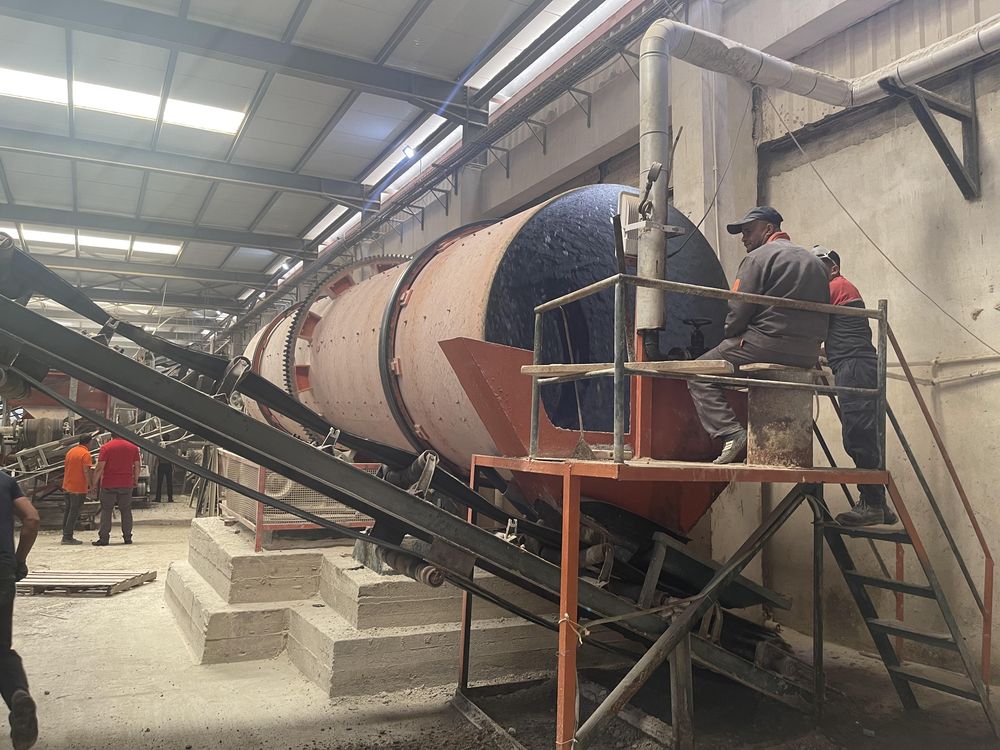
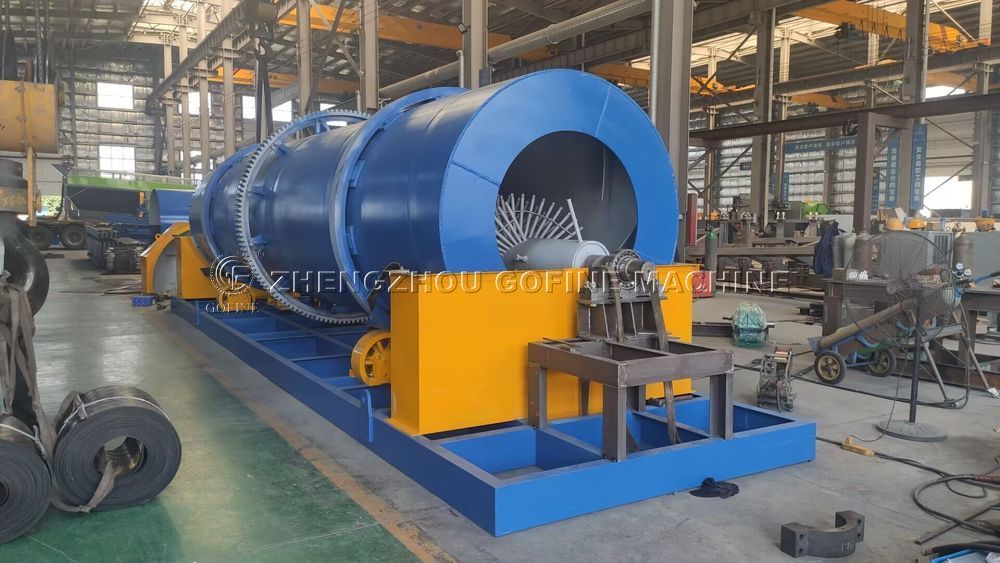
The mixed materials are sent to the disc granulator, the core equipment of the factory plant. The disc granulator adopts a simple structure, with an inclined disc and a stable base. Under the action of centrifugal force, gravity, and friction generated by the rotating disc, the materials roll continuously in the disc. With the assistance of atomized water, the powdered materials gradually agglomerate into spherical granules. The disc's inclination angle and rotation speed can be precisely adjusted according to the material characteristics: optimizing the parameters (such as 42° inclination angle + 22r/min rotation speed) can increase the granulation rate by 15%. The disc granulator has low energy consumption, simple operation, and easy maintenance, which is the key to ensuring the low cost of the factory plant. The disc inner wall can be equipped with a wear-resistant rubber lining to prevent adhesion, avoiding frequent shutdowns for cleaning and improving production efficiency.
5. Drying and Cooling (Simplified and Energy-Saving)
The wet granules produced by granulation are sent to a simple rotary dryer to remove moisture. The dryer can use natural gas, coal, or even crop straw as fuel, which is low in cost and easy to obtain. The drying temperature is controlled at 80-100℃, and the moisture content of the granules is reduced to below 10% to prevent caking during storage and transportation. Then, the dried granules are sent to a simple cooler (or natural cooling) to cool down to around 40℃, ensuring the stability of the finished product. The waste heat generated by the dryer can be reused to preheat the raw materials, further reducing energy consumption and operation cost. Small-scale factory plants can even use natural air-drying instead of drying equipment in suitable climates, saving more than 30% of equipment investment.
6. Screening and Packaging (Low-Cost and Efficient)
After cooling, the granules pass through a simple multi-layer vibrating screen for grading. Qualified granules (meeting the required size) are sent to a semi-automatic packaging machine for quantitative packaging, which is simple in operation and low in cost. Unqualified granules are returned to the crusher for reprocessing, realizing zero waste of materials. The packaging link can also be operated manually according to the budget, further reducing the investment in automatic packaging equipment. The entire packaging process is efficient and low-cost, ensuring the normal delivery of finished products. For small-scale production, manual packaging can reduce equipment investment by 50% compared with automatic packaging lines.
Equipment Configuration of Low Cost Cow Manure Disc Granulation Factory Plant (Cost-Saving Priority)
The equipment configuration of the low cost cow manure disc granulation factory plant adheres to the principle of "cost-saving, practical, and efficient", selecting core equipment and simplified auxiliary equipment to avoid unnecessary investment. According to the production scale, it is divided into three levels, which can be flexibly selected according to the actual needs of investors:
1. Small-Scale Factory Plant (Daily Output 5-10 Tons, Most Cost-Saving)
Core equipment: semi-wet material crusher, simple compost turner, disc granulator (diameter 1.2-1.8m), simple rotary dryer, vibrating screen, semi-automatic packaging machine. This configuration has the lowest investment, simple operation, and is suitable for family farms and small start-ups. It can effectively handle the cow manure generated by the farm itself and produce organic fertilizer for its own use or small-scale sales. The total investment is about 10,000-50,000 US dollars, and the operation cost is less than 50 US dollars per ton of finished products. The disc granulator of this scale has a hourly capacity of 0.8-1.5 tons, which is fully suitable for small-scale production needs.
2. Medium-Scale Factory Plant (Daily Output 10-20 Tons, Balanced Cost and Efficiency)
Core equipment: solid-liquid separator, semi-wet material crusher, semi-automatic compost turner, disc granulator (diameter 1.8-2.2m), rotary dryer (with waste heat recovery), vibrating screen, semi-automatic batching machine, automatic packaging machine. This configuration adds automatic batching and waste heat recovery equipment on the basis of small-scale configuration, which improves production efficiency and reduces energy consumption, and is suitable for small and medium-sized organic fertilizer manufacturers. The total investment is about 50,000-100,000 US dollars, and the operation cost is about 40-60 US dollars per ton of finished products. The disc granulator of this scale has a hourly capacity of 1.5-3 tons, which can meet the needs of small-scale batch production.
3. Large-Scale Low-Cost Factory Plant (Daily Output 20-30 Tons, Cost-Saving and Efficient)
Core equipment: automatic solid-liquid separator, high-efficiency crusher, automatic compost turner, double disc granulators, large-scale rotary dryer (with waste heat recovery), multi-layer vibrating screen, automatic batching system, automatic packaging line, simple dust removal and deodorization equipment. This configuration adopts double disc granulators to improve production efficiency, and is equipped with simple dust removal and deodorization equipment to meet higher environmental protection requirements. It is suitable for medium-sized organic fertilizer manufacturers with large-scale production needs. The total investment is about 100,000-150,000 US dollars, which is still much lower than that of large-scale drum granulation factory plants, and the operation cost is about 30-50 US dollars per ton of finished products. Multiple disc granulators can be connected in parallel to further expand production capacity without replacing the entire production line.
Application Scenarios of Low Cost Cow Manure Disc Granulation Factory Plant
Due to its advantages of low cost, simple operation, and flexible configuration, the low cost cow manure disc granulation factory plant is widely used in various fields related to cow manure treatment and organic fertilizer production, especially suitable for small and medium-sized investors and start-ups, which is also a key point to improve the relevance of the webpage to search keywords:
1. Large-Scale Cattle Farms
For large-scale cattle farms, the factory plant can efficiently handle a large amount of cow manure generated daily, solve the problem of cow manure accumulation and environmental pollution, and avoid environmental protection fines. The produced organic fertilizer can be used for the farm's own forage planting or sold to the market, realizing the recycling of resources and increasing additional income. It is a cost-effective solution for cattle farms to realize "breeding + planting" circular development. A practical case shows that a large-scale cattle farm with an annual cow manure treatment capacity of 100,000 tons can obtain an annual net profit of more than 1 million US dollars by building a low-cost disc granulation factory plant.
2. Small and Medium-Sized Organic Fertilizer Manufacturers
For small and medium-sized organic fertilizer manufacturers with limited initial investment, the factory plant is an ideal choice. It can use low investment to realize large-scale production of cow manure organic fertilizer, reduce production costs, and improve product competitiveness. The produced organic fertilizer is suitable for various crops (such as vegetables, fruits, grains), and has a broad market demand, which can help manufacturers quickly occupy the market and achieve profit growth. The factory plant can also produce customized organic fertilizer according to the needs of local crops, further improving market competitiveness.
3. Family Farms and Planting Cooperatives
Family farms and planting cooperatives can build small-scale low-cost cow manure disc granulation factory plants to produce organic fertilizer according to their own planting needs. The organic fertilizer produced can improve soil fertility, reduce the use of chemical fertilizers, and promote the increase of crop yield and quality, which is conducive to obtaining organic certification and improving the added value of agricultural products. At the same time, the surplus organic fertilizer can be sold to surrounding farmers, increasing additional income. The small-scale factory plant is easy to operate and requires little space, which is very suitable for family farms.
4. Rural Environmental Protection Projects
In rural environmental protection projects and rural revitalization projects, the low cost cow manure disc granulation factory plant can help solve the problem of rural organic waste (cow manure, crop straw) treatment, improve the rural ecological environment, and promote the development of circular agriculture. It is a cost-effective environmental protection solution suitable for popularization in rural areas, and can also drive local employment and increase farmers' income. Many regions have included such projects in environmental protection subsidies, further reducing the investment pressure of investors.
5. International Market (Developing Countries)
With the advantages of low cost, simple operation, and strong adaptability, the factory plant is especially suitable for the market of developing countries (such as Southeast Asia, Africa, South America). These regions have a large number of cattle farms and a huge demand for organic fertilizer, but the investment capacity is limited. The low cost cow manure disc granulation factory plant can meet their production needs, help local enterprises realize the resource utilization of cow manure, and promote the development of local organic agriculture. The equipment is easy to maintain and has a long service life, which is very suitable for the actual needs of developing countries.
How to Further Reduce the Cost of Cow Manure Disc Granulation Factory Plant?
On the basis of the existing low-cost advantages, investors can further reduce the production cost of the factory plant through the following methods, improve the profit margin and market competitiveness, and these points are also the key search points of users, which can further improve the SEO ranking of the webpage:
1. Optimize Raw Material Acquisition
Cooperate with local cattle farms to sign long-term cooperation agreements to obtain cow manure for free or at a low price, reducing the raw material cost. At the same time, use crop straw, food residues, and other waste materials as auxiliary materials, which not only adjusts the carbon-nitrogen ratio of the raw materials but also further reduces the raw material cost, realizing the comprehensive utilization of multiple organic wastes. For example, using crop straw as an auxiliary material can replace expensive commercial binders, saving 50-80 US dollars per ton of products.
2. Simplify Equipment Configuration According to Actual Needs
Do not blindly pursue "full configuration". According to the production scale and market demand, select the appropriate equipment configuration. For example, small-scale factory plants can use manual operation for packaging and fermentation turning, reducing the investment in automatic equipment. At the same time, choose cost-effective equipment with reliable quality, avoiding the high cost caused by purchasing high-end equipment that is not needed. Prioritizing cost-effective domestic equipment is also a wise choice, as domestic equipment is 50%-70% cheaper than imported products, and has advantages in spare parts supply and maintenance services.
3. Optimize Production Process to Reduce Energy Consumption
Optimize the fermentation and drying links: use crop straw, coal cinder, and other low-cost fuels for the dryer; reuse the waste heat generated by the dryer to preheat raw materials, reducing energy consumption. At the same time, reasonably control the fermentation time and temperature to avoid energy waste caused by excessive fermentation or insufficient fermentation. In addition, adjust the disc granulator parameters to improve the granulation rate and reduce material waste. Replacing old motors with variable frequency drives can reduce energy consumption by 15%-20%.
4. Improve Production Efficiency and Reduce Labor Cost
Train operators to improve their operation skills, reduce equipment failure rate and production waste, and improve production efficiency. At the same time, reasonably arrange the shift system to avoid idle labor. For medium and large-scale factory plants, appropriately add semi-automatic equipment to replace manual operation, reducing labor cost while improving production efficiency. The use of PLC intelligent control system can also reduce the number of operators and improve production efficiency.
5. Apply for Policy Subsidies
Most countries and regions have policy subsidies for environmental protection and circular agriculture projects. Investors can actively apply for relevant subsidies (such as livestock and poultry manure resource utilization subsidies, organic fertilizer production subsidies), which can reduce the initial investment and operation cost of the factory plant. The subsidy ratio in some regions can reach up to 40% of the equipment investment, which is an important way to further reduce costs. For example, some enterprises have successfully obtained subsidies accounting for 30% of the equipment investment, significantly shortening the payback period.
Conclusion
The low cost cow manure disc granulation factory plant is a cost-effective, efficient, and environmental protection production facility that adapts to the development needs of small and medium-sized investors and circular agriculture. It takes cow manure as the main raw material, takes the disc granulator as the core, and through simplified production processes and flexible equipment configuration, realizes the resource utilization of cow manure, turning waste into high-value organic fertilizer. It has the advantages of low initial investment, low operation cost, simple operation, and strong adaptability, and is widely used in cattle farms, small and medium-sized organic fertilizer manufacturers, family farms, and other fields.
In the context of the increasing emphasis on environmental protection and organic agriculture, the market demand for cow manure organic fertilizer is growing day by day. Building a low cost cow manure disc granulation factory plant can help investors reduce investment risks, quickly occupy the market, and achieve high returns with low investment. This article covers all the key information that users care about (price, advantages, process, configuration, cost-saving tips), which can effectively improve the relevance of the webpage to search keywords and help the webpage obtain a higher ranking in search engines.
If you are looking for a high-quality and low-cost cow manure disc granulation factory plant solution, we can provide customized configuration according to your production scale, budget, and market demand, ensuring that the factory plant meets your production needs and helps you achieve better economic and social benefits. Contact us today to learn more details!
Related Content
Latest News
- Custom Double Roller Extrusion Granulator | Dust-Free Roller Compactor
- High-Capacity Rotary Drum Granulator: The Core Solution for NPK & Compound Fertilizer Production
- Compound Fertilizer Cage Crusher with Screw Feeder | Non-Clogging Crusher
- Fertilizer Granulator Machines: Transforming Compost Powder into Premium Pelleted Fertilizer
- Diesel Semi-Wet Material Crusher: Heavy-Duty Solution for High-Moisture Waste Grinding
- Heavy-Duty 2.5m Disc Granulator for Mineral Fertilizer
- Towed Compost Turner: Heavy-Duty Solution for High-Volume Organic Fertilizer Production
- Stainless Steel Cow Bedding Recovery System: Convert Dairy Manure into Premium Bedding