


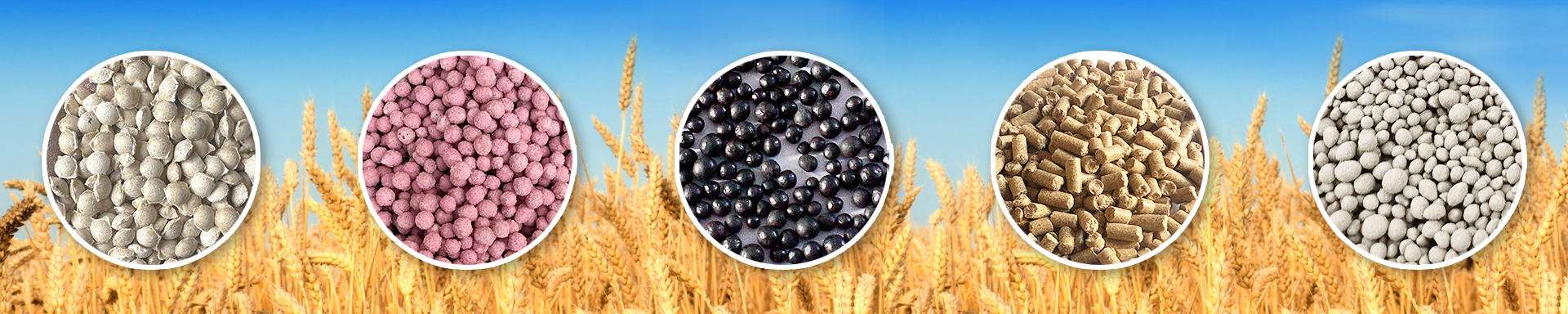
Phosphate Fertilizer Granulation Line: Double Roller Press Case Study
Published on: 2026-08-06Converting fine phosphate powders—such as Monoammonium Phosphate (MAP), Diammonium Phosphate (DAP), Single Superphosphate (SSP), and rock phosphate—into commercial granules presents distinct processing challenges. These inorganic mineral salts are highly hygroscopic, heat-sensitive, and lack natural elasticity.
Deploying a dry double roller press granulator offers an energy-efficient engineering solution. Operating on high-pressure physical compression, a specialized phosphate granulator line turns dry feedstocks into dense pellets at ambient temperature with zero added water and zero thermal drying.
Project Overview & Material Processing Challenges
Traditional wet granulation methods (such as wet rotary drums or pan granulators) require adding liquid binders to agglomerate phosphate powders. However, wet phosphate processing incurs severe operational drawbacks:
High Energy & Drying Overhead: Removing added moisture requires massive, fuel-burning rotary dryers.
Material Caking & Corrosion: Wet phosphate slurries coat machinery interiors, clog chutes, and accelerate rust on metal housing.
Thermal Nutrient Loss: High drying temperatures risk heat degradation and fertilizer caking in storage.
The Dry Compaction Advantage
A heavy-duty double roller press granulator eliminates moisture dependencies entirely. By feeding dry MAP, DAP, or SSP powder between counter-rotating alloy rollers, the intense mechanical load compresses particles into hard sheets. Internal breaker shafts then immediately crush the sheets into uniform, high-strength granules. This continuous dry extrusion phosphate granulation process runs at ambient temperature, lowering daily plant operational energy costs by over 40%.
Dry Extrusion Phosphate Granulation Process & Workflow
A commercial MAP DAP compaction line utilizes a compact, closed-loop processing layout:
[Dry Raw Materials] ➔ Batching ➔ Twin-Shaft Mixing ➔ Roller Press Compaction ➔ Crushing & Screening ➔ Packaging
1. Precision Dosing & Twin-Shaft Mixing: MAP, DAP, or SSP powders are blended with nitrogen or potassium dry ingredients in a twin-shaft horizontal mixer. Feedstock moisture is strictly maintained between 3% and 8%.
2. Roller Compaction & Flake Formation: The dry mixture feeds into the heavy-duty hopper of the double roller press granulator. Hydraulic alloy rollers squeeze the powder into dense, hard flakes.
3. Integrated Crushing & Precision Screening: The compacted flakes pass directly to lower breaker shafts, which crush them into 2–5 mm granules. A rotary sizing screen isolates qualified pellets from fine tailings.
4. Closed-Loop Recycling & Automated Packaging: Undersized fines automatically return via bucket elevator to the granulator hopper for re-compaction, achieving 100% material utilization. Qualified granules enter an anti-caking coating drum before automated bagging.
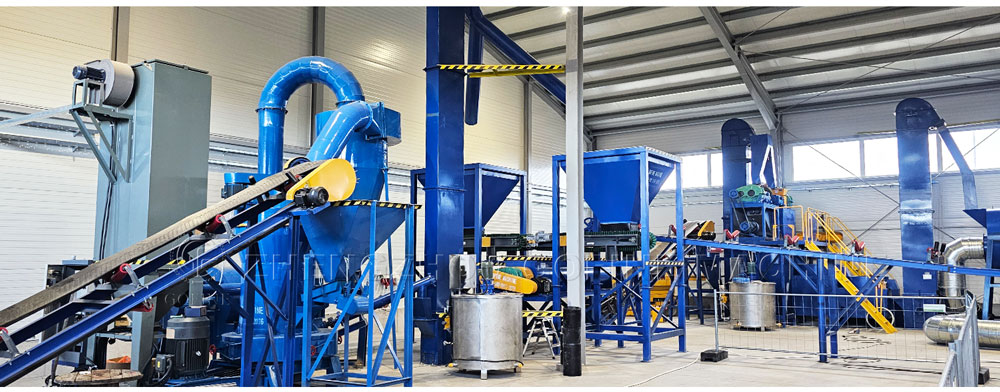
Complete Machinery Configuration (Equipment List)
Automated Loss-in-Weight Dosing System:
Precision feeders for exact multi-ingredient dry formulation ratios.
Heavy-Duty Twin-Shaft Horizontal Mixer:
High-homogeneity paddle mixer designed for abrasive mineral powders.
Dust-Tight Bucket Elevator:
High-capacity vertical conveyor with enclosed housing for dust containment.
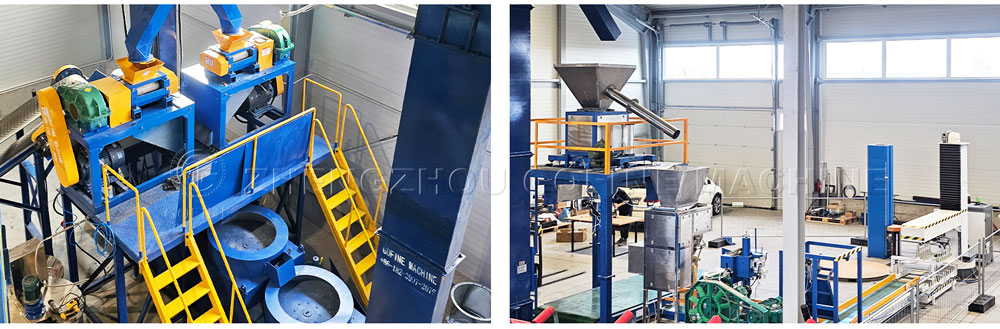
Gofine Double Roller Press Phosphate Granulator:
Heavy-duty main press featuring wear-resistant alloy roller sheets and integrated breaker shafts.
Rotary Sizing Screen:
High-efficiency mechanical screen separating target 2–5 mm granules.
Anti-Caking Coating Machine:
Applies liquid glaze or protective powder to prevent moisture absorption during storage.
Automated Pneumatic Bagging Scale:
High-speed filling unit for 25–50 kg retail bags or 1-ton bulk sacks.
Target Applications & Industrial Use Cases
MAP & DAP Granulation: Converting fine MAP/DAP byproduct powders into high-density granules for commercial blending.
SSP & TSP Processing: Compacts Single Superphosphate and Triple Superphosphate without heat degradation.
Custom NPK Dry Blending Lines: Rapidly pelletizes dry NPK formulations with fast cleanup during formula switches.
Frequently Asked Questions
Q: Why is a double roller press granulator preferred for phosphate fertilizer compaction?
A: MAP, DAP, and SSP powders are water-soluble and heat-sensitive. A double roller press granulator relies on dry physical extrusion, eliminating liquid binders and expensive fuel-burning rotary dryers while preserving nutrient stability.
Q: What is the ideal raw material moisture content for a dry extrusion phosphate granulation process?
A: Raw feed moisture must be strictly maintained between 3% and 8%. Moisture above 8% causes powder to stick to roller pockets, while moisture below 3% reduces flake compaction density.
Q: What granule shape and crush strength does a phosphate granulator produce?
A: The double roller compaction process yields oblate, pillow-shaped, or oval granules with high structural density and crush strength, ideal for broad-acre mechanical fertilizer spreaders.
Selecting the Right Phosphate Granulator System
Implementing a dry double roller press granulator on your MAP DAP compaction line ensures high hourly throughput, minimal maintenance downtime, and substantial energy savings. By deploying a specialized phosphate granulator, fertilizer producers eliminate thermal drying costs while delivering dust-free, non-caking commercial granules.
Request Your Phosphate Granulation Blueprint
Planning a new phosphate compaction facility or upgrading your NPK dry processing line? Contact the Gofine technical team for customized layout drawings, material pressure test reports, and direct factory equipment quotes.
Inquire today to receive direct manufacturer pricing on our double roller press granulator series!
Related Content
Latest News
- Crawler Compost Turner: Remote Control & Cab Models | Factory Direct
- Stainless Steel Disc Granulator for Bentonite Cat Litter Production Line
- Heavy-Duty Pan Granulator: Unique Rotary Scraper Design for Maximum Disc Area Utilization
- Mobile Lab Mini Briquette Press: 5mm Explosion-Proof Roll Compactor for Chemical & Fertilizer R&
- Custom Bar-Type Double Roller Extrusion Granulator: High-Yield Production of Irregular Strip Granule
- Custom Double Roller Extrusion Granulator | Dust-Free Roller Compactor
- High-Capacity Rotary Drum Granulator: The Core Solution for NPK & Compound Fertilizer Production
- Compound Fertilizer Cage Crusher with Screw Feeder | Non-Clogging Crusher