


Cassava Starch & Bentonite Cat Litter Production Line: Pan Granulator Guide
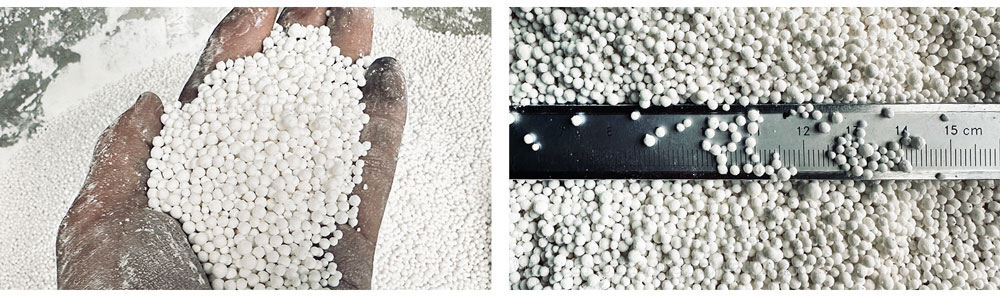
Published on: 2026-08-18Converting industrial starches and natural clays into low-dust, rapid-clumping cat litter pellets requires specialized wet agglomeration machinery. Combining cassava starch with sodium bentonite produces premium bio-based cat litter that offers high liquid absorption, exceptional clumping strength, and natural odor control.
To achieve precise 1–2 mm micro-granules, a heavy-duty disc granulator (pan granulator) provides the ideal physical rolling mechanism for uniform particle formation.
Material Properties & Wet Granulation Principle
Cassava starch acts as a natural binder when hydrated, while sodium bentonite delivers fast liquid swelling and structural clumping. Combining these raw materials requires a gentle rolling motion rather than heavy extrusion:
Hydraulic Activation: Fine cassava starch powder dissolves slightly under fine liquid misting, forming an adhesive film over sodium bentonite particles.
Rolling Agglomeration: Inside the inclined rotating pan of a pan granulator, micro-seeds continuously roll, gather dry powder, and grow into dense, spherical cat litter pellets.
Precise Size Control: Adjusting the pan angle and rotational speed allows operators to isolate fine 1–2 mm cat litter granules with high roundness (95%+).
Core Process Workflow for Pan Granulator Cat Litter Lines
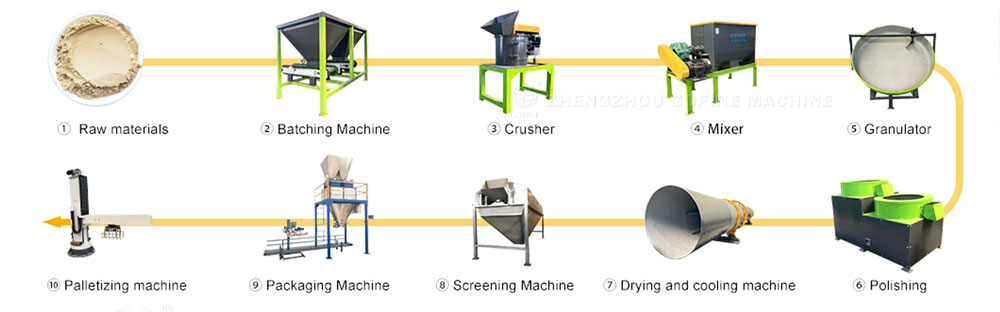
[Cassava Starch + Sodium Bentonite] ➔ Dosing & Mixing ➔ Disc Granulator ➔ Drying & Cooling ➔ Screening ➔ Bagging
Precision Batching & Dry Blending: Sodium bentonite clay, cassava starch, and functional deodorizing additives are thoroughly blended in a twin-shaft horizontal mixer.
Disc Granulator Agglomeration: The dry blend feeds into the wet granulator (disc granulator). Fine liquid mist sprays onto the rolling powder bed, building uniform 1–2 mm spheres.
Low-Temperature Drying & Cooling: Wet granules pass through a rotary drying drum to reduce moisture below 8%, followed by a cooling drum to harden pellet structure.
Sizing & Packaging: A rotary sizing screen separates qualified 1–2 mm granules, while oversized particles are crushed and undersized fines automatically recycle back to the granulator.
Key Equipment Advantages for Cat Litter Manufacturing
High Pellet Uniformity: The pan granulator's inclination angle naturally classifies particles, ensuring only fully formed 1–2 mm granules discharge over the rim.
Adjustable Pan Angle & Speed: Variable-frequency speed control and tilt adjustment (35°–55°) accommodate different ratios of cassava starch and sodium bentonite.
Wear-Resistant Liner: High-grade rubber or stainless steel liners prevent sticky starch-bentonite mixtures from coating the pan bottom.
Frequently Asked Questions
Q: Why is a disc granulator preferred for 1–2 mm cassava starch and bentonite cat litter?
A: Micro-granules (1–2 mm) require delicate, continuous rolling rather than heavy extrusion. A disc granulator allows precise moisture control via liquid misting, yielding smooth spherical cat litter pellets with high bulk density and low dust.
Q: What is the optimal moisture level during wet pan granulation?
A: Raw feed moisture during disc granulation should be maintained around 20%–28% to allow cassava starch to hydrate and bind the sodium bentonite powder without forming oversized lumps.
Optimize Your Cat Litter Manufacturing Line
Deploying an industrial pan granulator for cassava starch and sodium bentonite processing allows cat litter manufacturers to produce high-margin, low-dust 1–2 mm micro-granules with minimal operating overhead.
Related Content
Latest News
- Custom Bar-Type Double Roller Extrusion Granulator: High-Yield Production of Irregular Strip Granule
- Custom Double Roller Extrusion Granulator | Dust-Free Roller Compactor
- High-Capacity Rotary Drum Granulator: The Core Solution for NPK & Compound Fertilizer Production
- Compound Fertilizer Cage Crusher with Screw Feeder | Non-Clogging Crusher
- Fertilizer Granulator Machines: Transforming Compost Powder into Premium Pelleted Fertilizer
- Diesel Semi-Wet Material Crusher: Heavy-Duty Solution for High-Moisture Waste Grinding
- Heavy-Duty 2.5m Disc Granulator for Mineral Fertilizer
- Towed Compost Turner: Heavy-Duty Solution for High-Volume Organic Fertilizer Production