


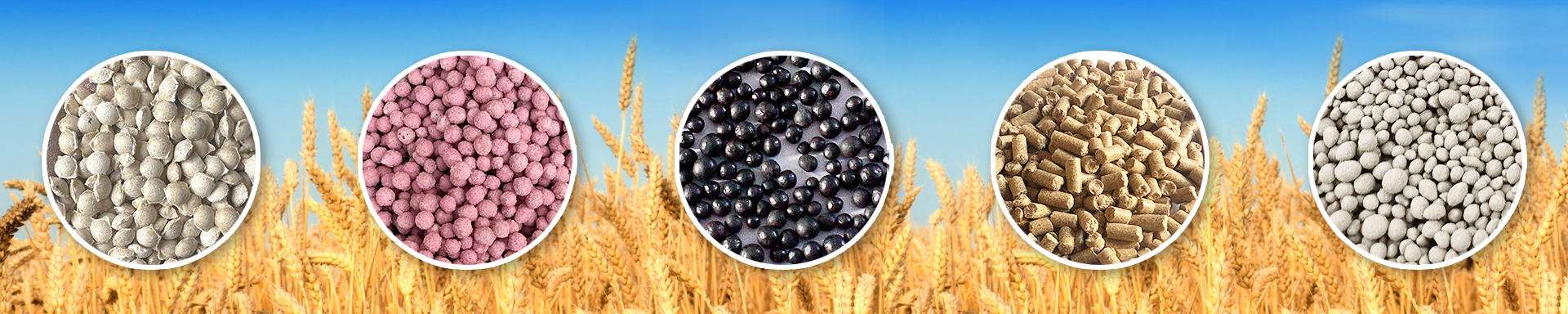
Comparison between disc granulator and roller press granulator
Published on: 2024-08-07Fertilizer granulator machine is an important production process for processing fertilizer raw materials into granules. Commonly used granulation equipment includes disc granulator and roller press granulator.
Next, I will introduce the differences and advantages of these two granulators in detail.
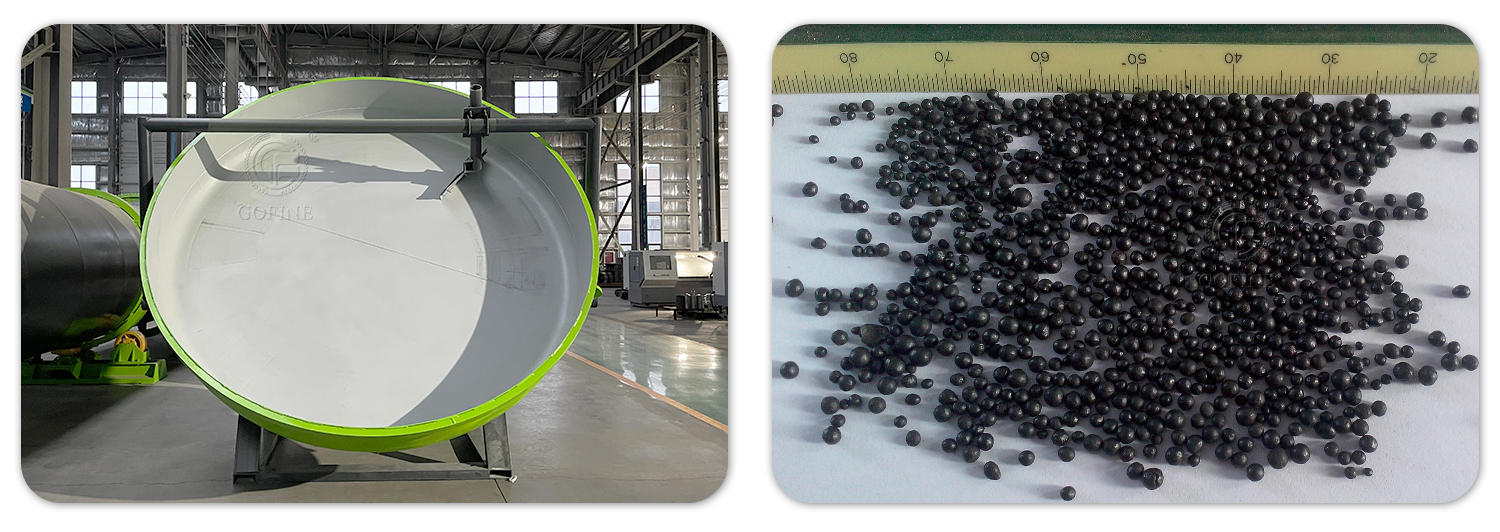
Disc Granulator
The disc granulation machine adopts wet granulation process. During granulation, a high-speed rotating disc is used to drive the powdered material in the disc to move, gradually embed and grow, and form regular spherical granular materials. The whole machine consists of inclined granulating disc, drive device, disc inclination adjustment mechanism, frame, liquid sprayer, scraper and other parts.
The disc granulator is more suitable for the production of organic fertilizer, bio-organic fertilizer and compound fertilizer. The ball formation rate is as high as 95%, the granulation speed is fast, the operation is simple, and it can form a complete fertilizer production line with related supporting equipment.
Double Roller Press Granulator
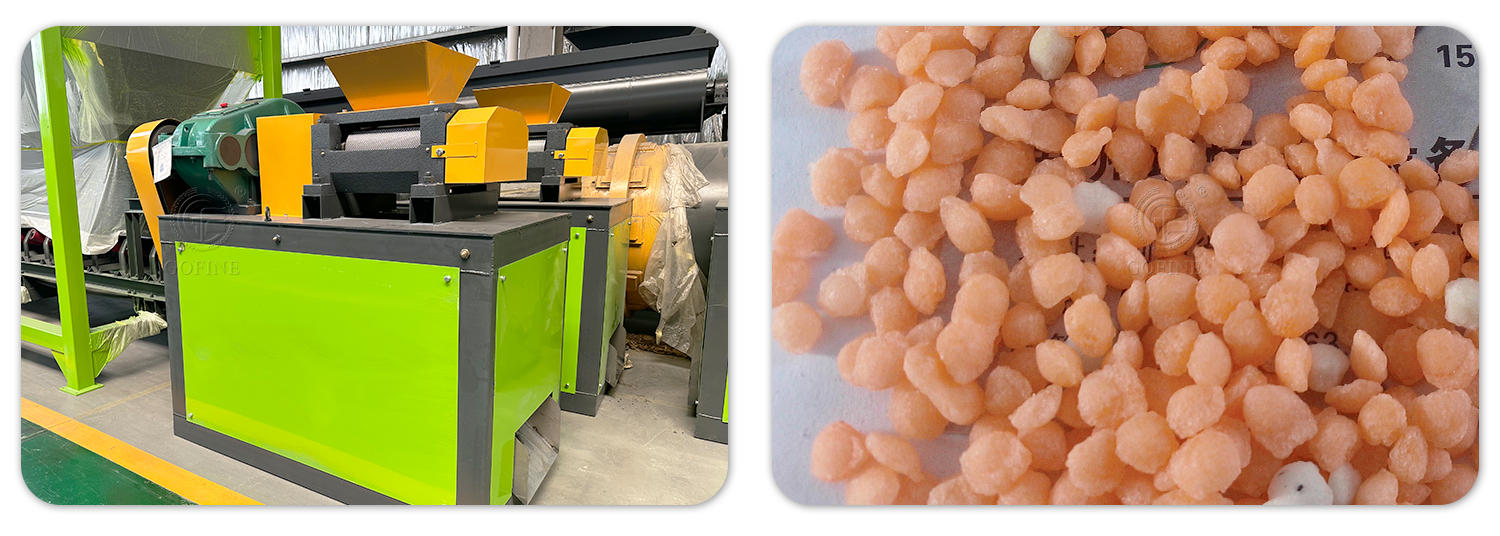
The double roller compactor adopts dry granulation process. The raw materials are extruded and formed by two relatively rotating rollers to form granular fertilizers with uniform specifications.
Compared with the disc granulator, the double roller press granulator has lower energy consumption. The fertilizer granules granulated by dry method do not need to be dried and can be packaged directly. The doublen roller press has the characteristic of completing granulation in one time, and is often used for granulation of urea, NPK, nitrogen, phosphorus and potassium, and potassium chloride powder materials.
In general, both the disc granulator and the roller press granulator can realize continuous fertilizer granulation, and the granulation process is slightly different. You can choose the appropriate granulation equipment according to factors such as raw materials, site area, production needs, etc., to improve the quality of fertilizer products and gain greater competitiveness in the market.
Related Content
Latest News
- Gofine Machinery Wins Turnkey Phosphate Fertilizer Line Project for Global Top 5 Giant
- Crawler Compost Turner: Remote Control & Cab Models | Factory Direct
- Stainless Steel Disc Granulator for Bentonite Cat Litter Production Line
- Heavy-Duty Pan Granulator: Unique Rotary Scraper Design for Maximum Disc Area Utilization
- Mobile Lab Mini Briquette Press: 5mm Explosion-Proof Roll Compactor for Chemical & Fertilizer R&
- Custom Bar-Type Double Roller Extrusion Granulator: High-Yield Production of Irregular Strip Granule
- Custom Double Roller Extrusion Granulator | Dust-Free Roller Compactor
- High-Capacity Rotary Drum Granulator: The Core Solution for NPK & Compound Fertilizer Production