


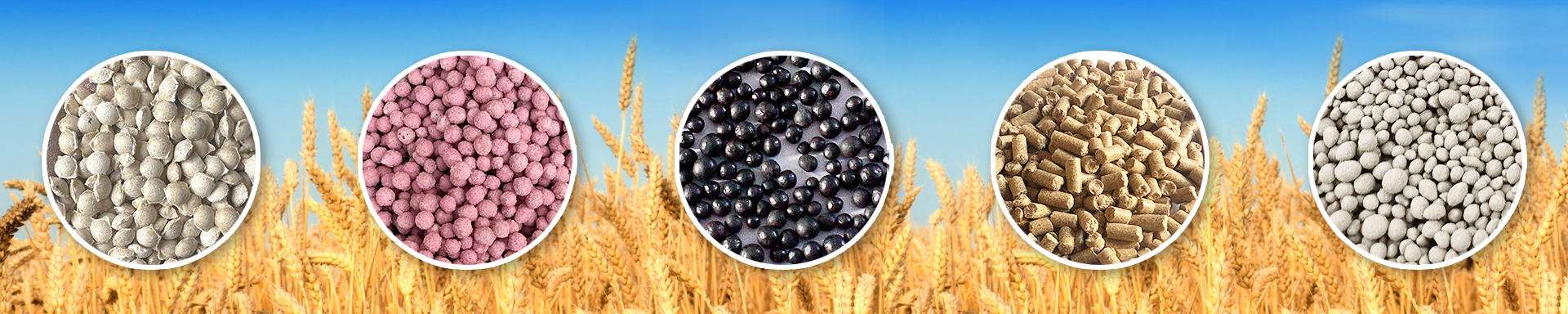
Factory Direct Disc Granulation Production Line Competitive Price & Quality
Published on: 2026-04-27In the fertilizer production industry, finding a high-quality disc granulation production line at a competitive price is the core demand of most manufacturers, investors, and agricultural enterprises. Factory direct disc granulation production line stands out with no middlemen, cost control, reliable quality, and customized services, becoming the first choice for enterprises pursuing cost-effectiveness. Unlike distributor-sold lines, factory direct supply eliminates intermediate price differences, ensures traceable equipment quality, and provides timely after-sales service. This article details its core value, configuration, process, advantages, application scenarios, and purchase guide, integrating Google SEO keywords to help global users find cost-effective solutions.
What Is Factory Direct Disc Granulation Production Line
Factory direct disc granulation production line is a specialized fertilizer granulation system designed, produced, and sold directly by manufacturers to end users, without intermediate distributors. Centered on the disc granulator, it integrates pretreatment, batching, mixing, granulation, drying, cooling, screening, and packaging, efficiently converting powdery raw materials into uniform granular fertilizers. Its biggest feature is direct manufacturer-user connection, reducing purchase costs, enabling customization, and providing one-stop after-sales service from installation to maintenance.
Core Characteristics of Factory Direct Supply Model
The factory direct supply model has four key advantages: price transparency (no middleman markup, 15%-30% cost reduction vs distributors), quality control (strict production standards, traceable components), customized service (adjusted for user scale, raw materials, and product needs), and professional after-sales (timely on-site installation, training, and maintenance).
Difference Between Factory Direct and Distributor Supply
Factory direct supply outperforms distributors in four aspects: lower price (no intermediate profit), better quality (brand-new, standard-compliant equipment), faster after-sales (direct manufacturer response within 24 hours), and higher flexibility (customized solutions vs fixed models). For users pursuing long-term stability, factory direct lines are more reliable.
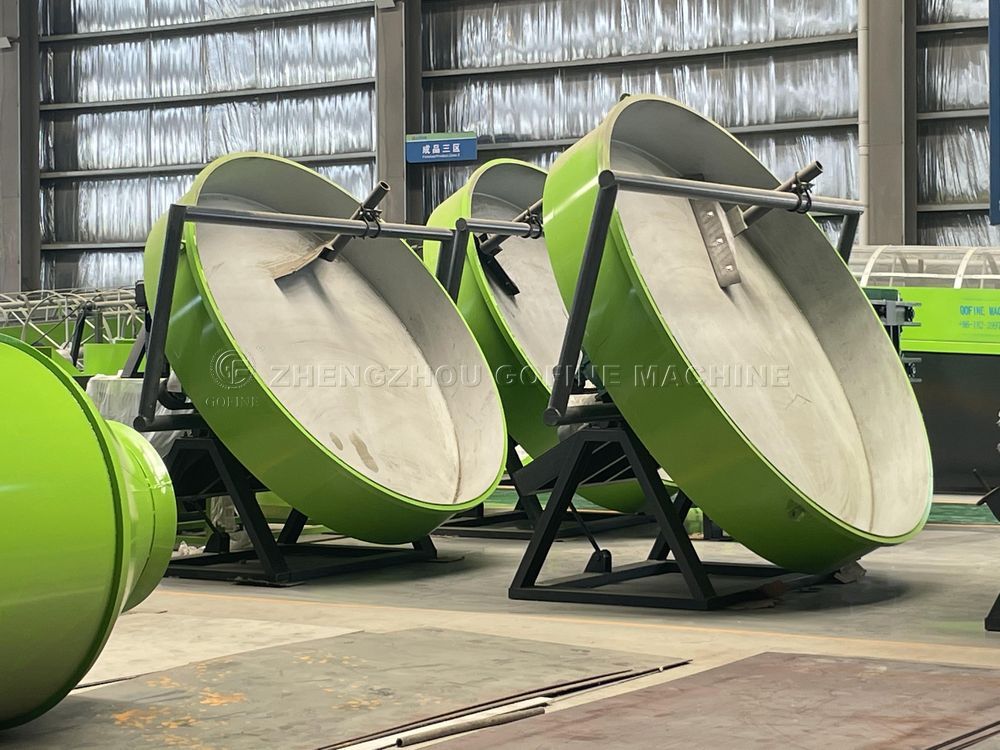
Core Equipment Configuration
A complete factory direct line consists of six key systems, flexibly matched by manufacturers based on user needs and budget, ensuring efficiency and cost-effectiveness.
1. Raw Material Pretreatment System
This system includes a crusher, screening machine, and magnetic separator. The crusher turns large raw materials (straw, phosphate rock, manure) into 2-5mm powder; the screening machine removes impurities; the magnetic separator protects core equipment. Frequency conversion control ensures stable processing. Factory direct prices range from $800 to $5,500.
2. Batching and Mixing System
Equipped with a quantitative feeder, electronic scale, and high-efficiency mixer, it ensures uniform nutrient distribution (batching accuracy ±0.3%, mixing uniformity >95%). Customizable for compound fertilizer production, factory direct prices are 20% lower than distributors on average.
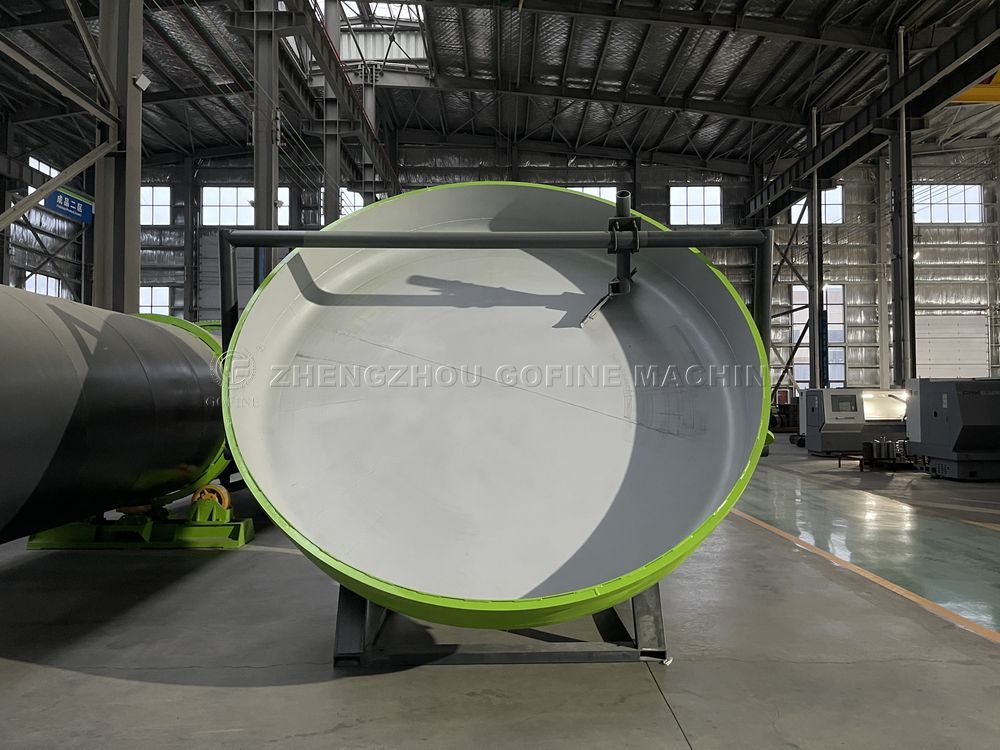
3. Core Disc Granulator
The core equipment, with a 1.2-6m customizable disc (high-chromium alloy/stainless steel), stepless adjustable inclination (35°-65°) and rotation speed (30-50 rpm), granulation rate >93%. Equipped with anti-adhesion lining and precise water spraying, factory direct prices range from $888 to $39,000.
4. Drying and Cooling System
Includes a rotary dryer (waste heat recovery, moisture reduction to <15%) and counter-flow cooler (cools to room temperature to avoid caking). Connected to a dust remover (dust collection >95%), customized by manufacturers for production capacity.
5. Screening and Return System
Double-layer grading screen separates unqualified particles (recycled for reprocessing), ensuring finished product uniformity. Frequency conversion vibration ensures high efficiency and low noise, matched to production capacity.
6. Automatic Packaging System
Fully/semi-automatic, with weighing accuracy ±0.1%, packaging speed 800-2000 bags/hour, adjustable for 25kg/50kg/1000kg specifications. Factory direct supply ensures compatibility with the whole line.
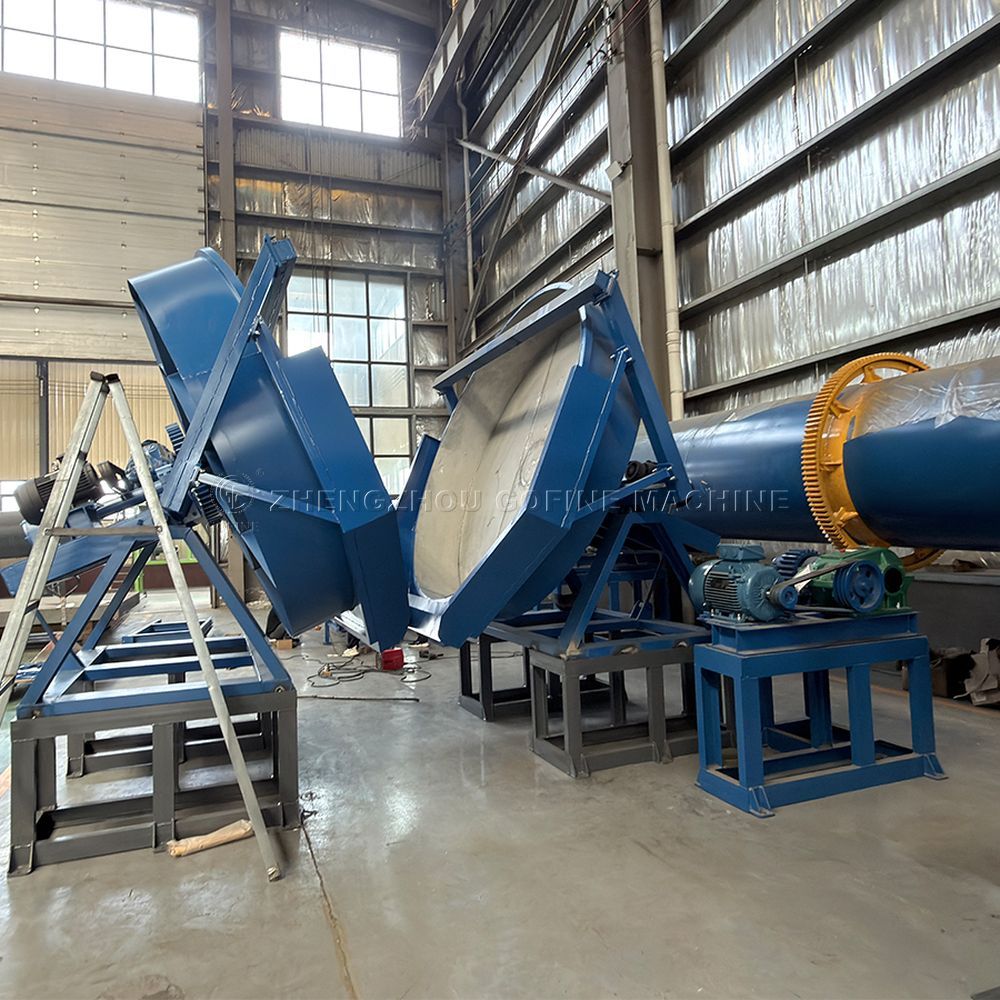
Complete Production Process
The streamlined continuous process, designed by manufacturers for user needs, has 8 key steps, flexible for organic/compound/inorganic fertilizers.
Step 1: Raw Material Collection and Sorting
Collect raw materials (organic: manure, straw; compound: urea, potassium chloride; inorganic: industrial by-products), sort to remove impurities. Manufacturers provide raw material selection guidance.
Step 2: Raw Material Pretreatment
Crush raw materials to 2-5mm, screen impurities; ferment organic raw materials to kill pathogens. Manufacturers adjust processes for raw material characteristics.
Step 3: Intelligent Batching and Mixing
Accurate batching per formula, mix with binders for 5-8 minutes. Manufacturers provide formula guidance for market-oriented products.
Step 4: High-Efficiency Disc Granulation
Raw materials agglomerate into spherical particles (sphericity >85%) via centrifugal force, friction, and gravity. Manufacturers debug parameters for optimal effect.
Step 5: Drying Treatment
Dry particles at 80-120℃ for 15-30 minutes (moisture <15%), using waste heat to save energy. Dust remover ensures clean production.
Step 6: Cooling Treatment
Cool particles to room temperature in 10-20 minutes to avoid caking. Dust remover maintains cleanliness.
Step 7: Screening and Return Processing
Separate unqualified particles for reprocessing, ensuring uniformity. High screening efficiency matches production rhythm.
Step 8: Automatic Packaging and Storage
Automatic weighing, bagging, and labeling; transport to dry, ventilated warehouses. Manufacturers provide warehouse layout suggestions.
Competitive Advantages (Google SEO Focus)
Factory direct lines excel in price, quality, service, and flexibility—key SEO selling points.
1. Competitive Price: No Middlemen, Cost Saving
Factory ex-factory prices reduce costs by 15%-30% vs distributors. Small-scale lines ($12,000-$25,000) vs distributor prices ($15,000-$30,000); large-scale lines save tens of thousands. Flexible payment eases capital pressure, prices range from $888 to $550,000.
2. Reliable Quality: Strict Control, Traceable Source
Strict quality control (ISO9001, CE), high-quality components, 24-hour continuous operation (annual runtime >300 days), failure rate <5%. 1-2 year warranty, free maintenance/spare parts. Finished fertilizers have uniform particle size and stable nutrients.
3. Customized Service: Tailor-Made
Manufacturers adjust configuration for user needs (e.g., high-moisture raw materials need efficient drying; small-scale users get simplified setups). R&D teams develop new functions for special needs.
4. Professional After-Sales: One-Stop Service
On-site installation, commissioning, and training; 24-hour hotline, 24-hour fault response. Long-term spare parts supply and regular follow-up visits solve user worries.
5. Energy Saving and Environmental Protection
Frequency conversion motors (30%-40% energy saving), waste heat recovery, closed production (dust collection >95%). Processes industrial/agricultural waste, compliant with global environmental standards, suitable for export.
Application Scenarios
Widely used in fertilizer production and other granulation fields.
1. Small-Scale Enterprises/Family Farms
Small-capacity lines (1-5 tons/hour, $12,000-$25,000) process local agricultural waste, low investment risk, quick return (3-6 months).
2. Medium-Scale Compound Fertilizer Enterprises
Medium-capacity lines (5-20 tons/hour, $25,000-$100,000) produce multiple compound fertilizer specifications, reducing labor costs and meeting environmental standards.
3. Large-Scale Fertilizer Bases
Large-capacity lines (20-50 tons/hour, $100,000-$550,000) support 24-hour continuous production (annual output up to 300,000 tons), fully automatic, stable, and cost-saving.
4. Other Industries
Used in chemical, feed, mineral, and environmental industries (e.g., municipal sludge granulation). Manufacturers provide customized solutions.
How to Choose a Reliable Factory Direct Line
Consider 5 factors for cost-effectiveness and long-term benefits.
1. Clarify Needs and Budget
Define production scale, fertilizer type, and budget: small-scale ($12k-$25k), medium ($25k-$100k), large ($100k-$550k). Consider future expansion.
2. Evaluate Manufacturer Qualifications
Prioritize manufacturers with ISO9001/CE certification, R&D strength, and experience. Check successful cases and visit factories on-site if possible.
3. Focus on Equipment Quality and Parameters
Core equipment should use wear-resistant materials; granulation rate >93%, particle size error ±0.5mm. Ask for technical parameters and test reports.
Confirm After-Sales Commitments
Ensure 24-hour hotline, on-site service, 1-2 year warranty, and spare parts supply. Sign a formal after-sales contract; confirm overseas service for export users.
Compare Price and Cost Performance
Compare multiple manufacturers, calculate comprehensive cost per ton, avoid low-price inferior equipment. Modular lines reduce initial investment; check for policy subsidies.
Conclusion
Factory Direct Disc Granulation Production Line Competitive Price & Quality offers cost-effectiveness, quality assurance, customization, and professional after-sales. It helps users reduce costs, improve efficiency, and gain market competitiveness. Suitable for all scales of fertilizer production, it is a reliable solution for global users pursuing sustainable development.
Related Content
- Heavy-Duty 2.5m Disc Granulator for Mineral Fertilizer
- Disc Granulator Sizes & Material Guide (1m to 6m Models)
- Diatomite Granulation Production Line: Equipment & Process Guide
- Disc Granulator with Simple Dust Hood & Dust Collection System
- Roller vs. Disc vs. Drum Granulator: Which One Suits Your Material?
- Case Study: Chicken Manure Fertilizer Line with Drum & Pan Granulation in Russia
- Disc Granulator vs. Roller Granulator: Selection Guide
- High Granulation Rate Disc Type Cat Litter Granulator Produce Uniform Particles
Latest News
- Heavy-Duty 2.5m Disc Granulator for Mineral Fertilizer
- Towed Compost Turner: Heavy-Duty Solution for High-Volume Organic Fertilizer Production
- Stainless Steel Cow Bedding Recovery System: Convert Dairy Manure into Premium Bedding
- Turn Limestone Powder into Premium Mineral Fertilizer: Complete Granulation Production Lines
- How to Make Organo-Mineral Fertilizer from Poultry Manure & Rock Phosphate
- Bedding Recovery System for Dairy Farms | Manure Recycling
- Calcium & Magnesium Chloride Granulation Production Line (Double Roller Extrusion System)
- Heavy-Duty Organic Fertilizer Compost Turner Machine for Commercial Composting