


Heavy-Duty Organic Fertilizer Compost Turner Machine for Commercial Composting
Published on: 2026-09-18Efficient moisture reduction, oxygen supply, and temperature control are critical when processing livestock manure, crop residues, and municipal green waste into commercial organic fertilizer. Among all aerobic composting methods, windrow composting remains the most cost-effective approach for medium- to large-scale operations.
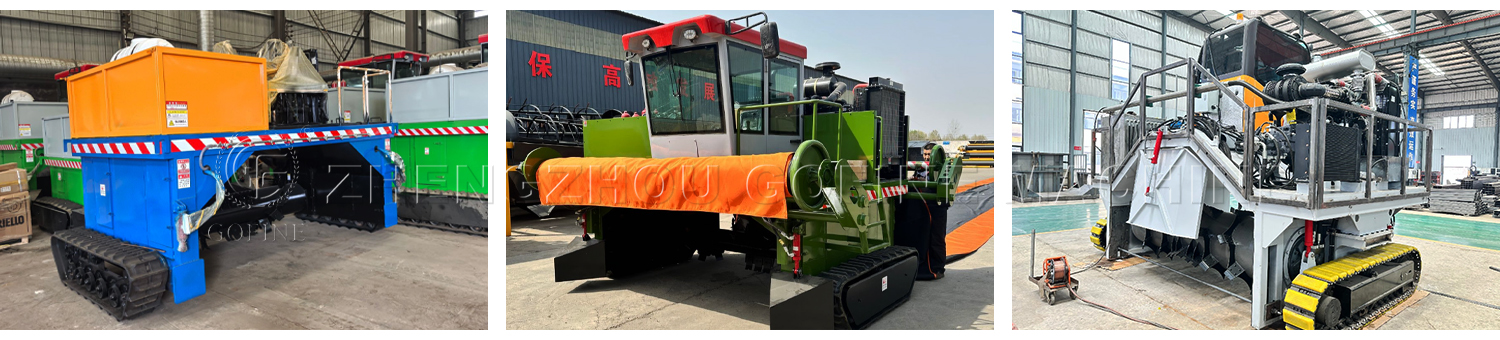
At the center of this process is the organic fertilizer compost turner (or compost windrow turner). This heavy-duty compost machine straddles long triangular heaps of organic material (windrows), mixing, fluffing, and aerating the organic waste in a single pass to dramatically shorten the fermentation cycle.
Key Types of Compost Windrow Turners for Industrial Use
Choosing the right windrow composting equipment depends on your plant layout, site surface, daily processing volume, and existing agricultural equipment.
Self-Propelled Windrow Turner (Crawler & Wheel Types)
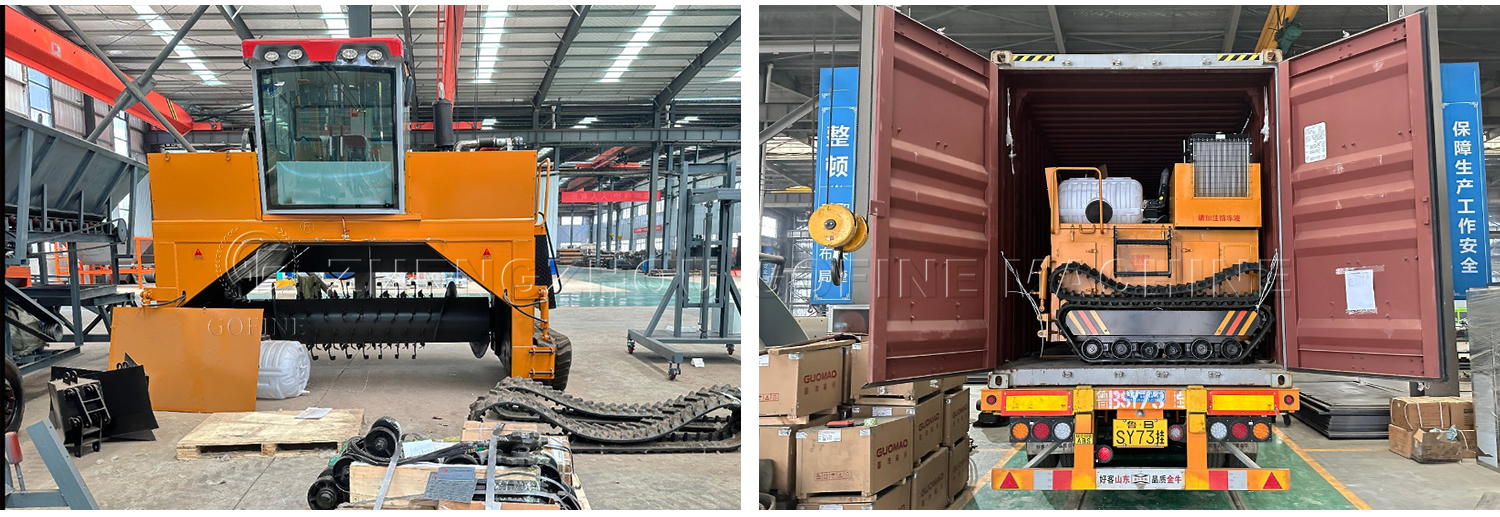
Designed for dedicated fertilizer plants and municipal waste treatment facilities, a self-propelled windrow turner runs on its own high-torque diesel engine without requiring external towing vehicles.
-
Crawler/Track Type: Features heavy-duty rubber or steel tracks for high traction on muddy, unpaved, or uneven outdoor composting yards.
-
Wheel Type: Ideal for flat, hard-paved concrete sites, offering faster travel speeds between windrow rows.
-
Best For: Industrial-scale plants requiring continuous operation and high daily volumetric throughput.
Tractor-Driven / Towable Windrow Turner (PTO Driven)
For farm-based composting or mid-sized fertilizer producers, a tractor driven compost turner utilizes the Power Take-Off (PTO) shaft and hydraulic system of a standard farm tractor.
-
Cost-Effective: Lowers initial CAPEX by leveraging your existing tractor power (typically 80–180 HP).
-
Simplified Maintenance: Simple mechanical driveline with fewer standalone engine components to service.
-
Best For: Agricultural farms, livestock operations, and budget-conscious commercial composting sites.
How a Quality Compost Machine Optimizes Organic Fertilizer Production
Using a specialized commercial compost turner instead of conventional front-end loaders delivers three key process advantages:
1. Enhanced Aeration & Rapid Moisture Discharge: The high-speed rotor break up inner core compaction, injecting fresh air into the stack while venting trapped heat and excess steam mist.
2. Pathogen Elimination via Heat Management: By turning the pile regularly, the core temperature reaches and maintains 55℃--65℃, destroying weed seeds, harmful bacteria, and pathogens without burning organic carbon content.
3. Homogeneous Material Blending: Mixes high-nitrogen manure with high-carbon straw or sawdust evenly, ensuring consistent decomposition and higher-quality bio-organic fertilizer output.
Technical Specifications & Selection Matrix
| Model Type | Drive Source | Suitable Windrow Width | Suitable Windrow Height | Processing Capacity | Site Requirement |
| Small PTO Towable | Tractor PTO (80–120 HP) | 2.0m – 3.0m | 1.0m – 1.3m | 400-800m3/h | Dirt / Gravel / Concrete |
| Medium Wheel Self-Propelled | Dedicated Diesel Engine | 2.5m – 3.6m | 1.2m – 1.6m | 800-1500m3/h | Concrete / Compacted Yard |
| Heavy Crawler Self-Propelled | Heavy Diesel Engine | 3.0m – 5.0m | 1.5m – 2.2m | 1500-3000m3/h | All Terrains / Unpaved Yards |
Frequently Asked Questions
Q: What is the primary function of an organic fertilizer compost turner?
A: An organic fertilizer compost turner mechanically lifts, mixes, and aerates windrows of organic waste. It supplies essential oxygen to aerobic bacteria, regulates pile temperature, releases excess moisture, and accelerates the composting cycle from months down to weeks.
Q: Which is better for windrow composting: self-propelled or tractor-tow models?
A: Self-propelled models offer higher processing speeds, better maneuverability, and larger windrow capacity for dedicated industrial plants. Tractor-tow models are better for agricultural farms that already own tractors and want to minimize initial equipment investment.
Q: How often should windrows be turned using a commercial compost machine?
A: During the active fermentation phase (the first 1–2 weeks), piles are typically turned every 2 to 3 days when internal temperatures exceed 65℃. Turning frequency gradually decreases as decomposition completes and temperatures stabilize.
Get the Right Organic Waste Composting Machine for Your Plant
Selecting the right compost windrow turner depends on your raw material composition, yard footprint, and target tonnage output.
Contact our technical engineering team today for detailed equipment catalogs, custom CAD yard layouts, and direct factory pricing on our full line of compost machines!
Related Content
- Towed Compost Turner: Heavy-Duty Solution for High-Volume Organic Fertilizer Production
- How to Make Organo-Mineral Fertilizer from Poultry Manure & Rock Phosphate
- Heavy-Duty Organic Fertilizer Compost Turner Machine for Commercial Composting
- 100000–200000 Ton/Year Organic Fertilizer Production Line: Wheel Turner & Rotary Drum Granulat
- How Palm Oil Mills Turn EFB and POME into High-Value Organic Fertilizer
- Case Study: Chicken Manure Fertilizer Line with Drum & Pan Granulation in Russia
- In-Vessel Fermentation vs. Windrow Composting for Palm Waste Processing
- Turnkey Organic Fertilizer Plant Solution: Complete Engineering & Machinery Guide
Latest News
- Towed Compost Turner: Heavy-Duty Solution for High-Volume Organic Fertilizer Production
- Stainless Steel Cow Bedding Recovery System: Convert Dairy Manure into Premium Bedding
- Turn Limestone Powder into Premium Mineral Fertilizer: Complete Granulation Production Lines
- How to Make Organo-Mineral Fertilizer from Poultry Manure & Rock Phosphate
- Bedding Recovery System for Dairy Farms | Manure Recycling
- Calcium & Magnesium Chloride Granulation Production Line (Double Roller Extrusion System)
- Heavy-Duty Organic Fertilizer Compost Turner Machine for Commercial Composting
- Disc Granulator Sizes & Material Guide (1m to 6m Models)