


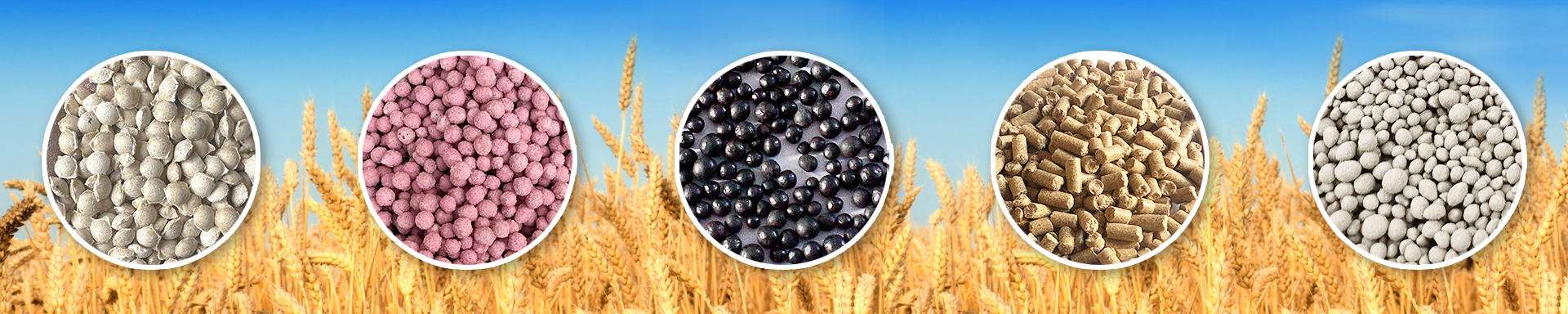
Calcium & Magnesium Chloride Granulation Production Line (Double Roller Extrusion System)
Published on: 2026-09-20Calcium chloride and magnesium chloride are widely used as industrial deicing agents, dust suppressants, oil drilling additives, and desiccants. However, both chemical salts are highly hygroscopic, heat-sensitive, and prone to severe equipment corrosion.Using traditional wet granulation methods (which require liquid binders and high-temperature thermal drying) often causes chemical dissolution, severe equipment caking, and high fuel costs.A dedicated calcium chloride & magnesium chloride granulation production line utilizing double roller press extrusion technology provides a dry, energy-efficient, and corrosion-resistant processing solution that turns fine chemical powders into high-density granules without water addition or thermal drying.
Complete Production Line Process Workflow
-
Automatic Batching & Dosing (Automatic Batching Machine): Multi-hopper batching scales accurately measure raw calcium/magnesium chloride powders and anti-caking functional additives according to exact formula ratios.
-
Homogeneous Powder Blending: Horizontal twin-shaft mixers blend the dry powders thoroughly, ensuring uniform chemical distribution before compaction.
-
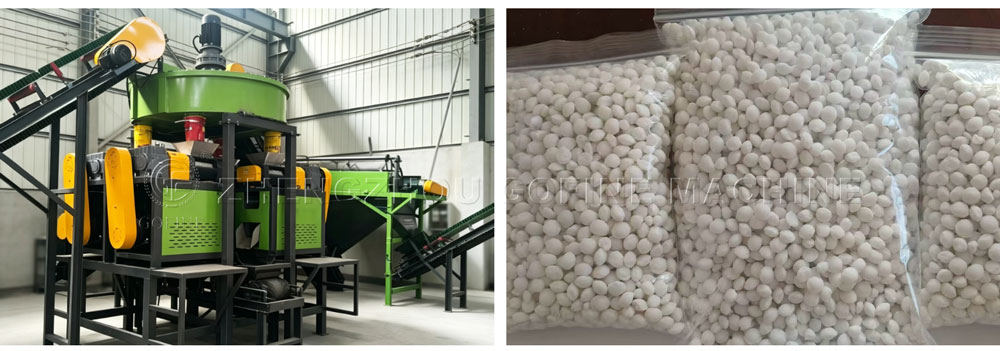
Dry Roller Extrusion (Double Roller Press Granulator): Dual counter-rotating forged alloy rollers exert extreme mechanical pressure on the dry powder, compacting fine particles into solid, dense flakes without adding water or liquid binders.
-
Crushing & Screening: The compacted flakes are broken down by a flake crusher and classified by a multi-layer vibrating screen. On-spec granules (2.0--5.0 mm) pass forward, while fine dust is automatically conveyed back to the batching system for 100% recycling.
-
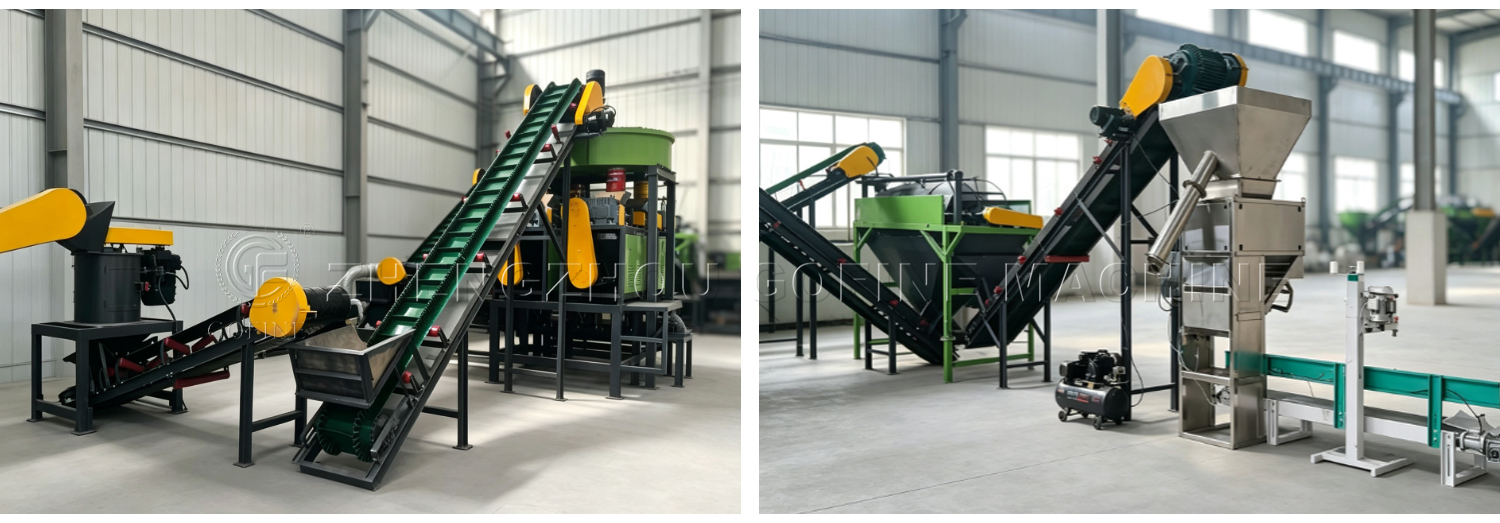
Automated Moisture-Proof Bagging (Automatic Packaging Machine): Finished granules are immediately packed into moisture-sealed 25 kg bags or ton bags (FIBC) using automated weighing and sealing equipment to prevent atmospheric humidity absorption.
Core Equipment Specifications & Technical Features
| Machine Unit | Construction Material | Key Technical Role | Main Advantage |
| Automatic Batching Machine | Heavy Carbon Steel / SUS304 | Precision dosing of raw chemical salts | Computerized PLC control, dynamic loss-in-weight batching |
| Double Roller Press Granulator | Corrosion-Resistant Alloy / SUS316L | High-pressure dry mechanical compaction | Zero thermal drying needed, saves up to 40% operating energy |
| Flake Crusher & Screener | Heavy-Duty Alloy Roller Sheets | Disintegration of compressed sheets & particle sizing | High output yield (>90%), adjustable granule sizing |
| Automatic Packaging Machine | Anti-Corrosive Stainless Steel Frame | Automated weighing, bagging, and thermal heat-sealing | Sealed valve/open-mouth bagging, prevents moisture caking |
Why Choose Dry Extrusion Granulation for Chloride Salts?
-
Zero Thermal Drying Needed (Low OPEX): Eliminates hot blast stoves, gas burners, and rotary dryers completely. This drastically reduces plant fuel bills and carbon emissions.
-
Corrosion-Resistant Engineering: Chemical contact parts are built using SUS304 / SUS316L stainless steel or special anti-wear alloy coatings to resist aggressive chloride ions.
-
High Granule Hardness & Density: Compressed oblong/oval granules feature high crushing strength, preventing degradation and dust generation during long-distance bulk shipping.
-
Closed-Loop Powder Recovery: Dust-tight enclosures on conveyors and crushers capture floating salt dust and re-feed it into the extrusion process with zero raw material waste.
Production Capacity Options: From Small Lines to Large Plants
-
Small Line (1.5 – 3 Tons/Hour): Single double roller press granulator paired with a 2-hopper automatic batching unit and semi-automatic bagging scale.
-
Medium Line (5 – 8 Tons/Hour): Two double roller press granulators operating in parallel, connected to a centralized 3-hopper batching system and automated packing robot.
-
Industrial Scale (10 – 15+ Tons/Hour): Multi-roller parallel line configuration utilizing high-capacity automatic batching stations, continuous screening, and fully automated packaging lines.
Frequently Asked Questions
Q: Why is dry extrusion granulator better than disc or drum granulator for calcium chloride?
A: Calcium chloride and magnesium chloride absorb atmospheric moisture instantly and dissolve when exposed to liquid sprays. Dry double roller extrusion uses mechanical pressure only, eliminating water addition and expensive thermal drying.
Q: How does the line prevent finished granules from absorbing moisture during packaging?
A: The automatic packaging machine features rapid weighing chutes and heavy-duty thermal heat-sealing mechanisms, packaging finished CaCl2 / MgCl2 granules into moisture-barrier plastic bags immediately after screening.
Get a Custom Calcium & Magnesium Chloride Line Proposal
Gofine provides complete, turn-key calcium chloride and magnesium chloride granulation production lines, featuring automated batching systems, double roller press granulators, screening units, and automated packaging machines.
Related Content
- Calcium & Magnesium Chloride Granulation Production Line (Double Roller Extrusion System)
- 10 TPH Snow Melt Agent Production Line: 6 Roller Press Granulators in Parallel
- SSP vs. NPK Production Line: Granulation & Formulation Explained
- Calcium chloride granulation plant — Fertilizer production process
Latest News
- Heavy-Duty 2.5m Disc Granulator for Mineral Fertilizer
- Towed Compost Turner: Heavy-Duty Solution for High-Volume Organic Fertilizer Production
- Stainless Steel Cow Bedding Recovery System: Convert Dairy Manure into Premium Bedding
- Turn Limestone Powder into Premium Mineral Fertilizer: Complete Granulation Production Lines
- How to Make Organo-Mineral Fertilizer from Poultry Manure & Rock Phosphate
- Bedding Recovery System for Dairy Farms | Manure Recycling
- Calcium & Magnesium Chloride Granulation Production Line (Double Roller Extrusion System)
- Heavy-Duty Organic Fertilizer Compost Turner Machine for Commercial Composting